


RESOURCES
Blogs
Insights, strategies, and updates on research commercialization, university innovation, industry partnerships, and AI-powered prospecting
Connecting Industry & Academia
CMU and Fujitsu Launch Physical AI Research Center
April 27, 2026
•
xx
MIN READ
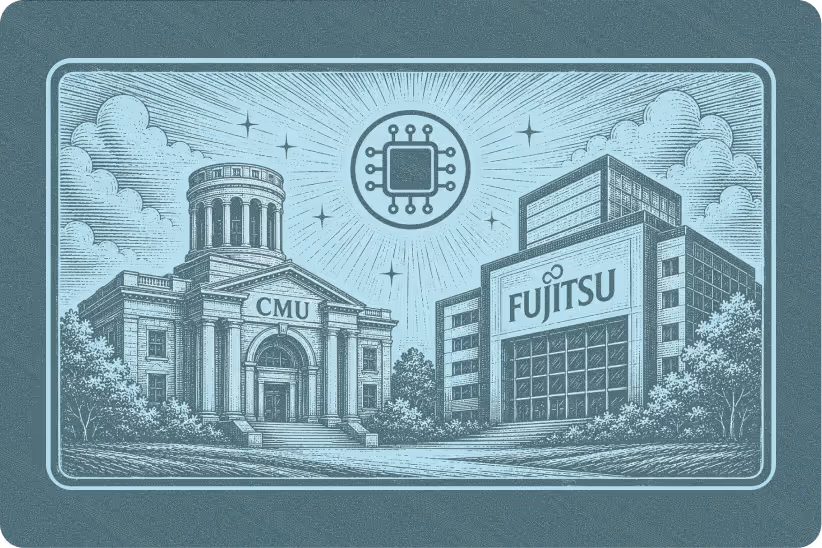
Artificial intelligence is moving beyond servers and screens. Carnegie Mellon University (CMU) and Fujitsu, a top Japanese IT provider, have partnered on an AI research center to revolutionize how machines interact with the physical world.
The Fujitsu-Carnegie Mellon Physical AI Research Center is devoted to creating AI-powered machines and robots that tackle critical issues like labor shortages and workplace safety. This groundbreaking partnership is a major leap toward bringing innovative physical AI solutions to real-world challenges.
This partnership demonstrates how embedding intelligence into real-world machines—and working together—drives true innovation across industries.
Bringing AI into the Physical World
Physical AI puts intelligence directly into robots and autonomous systems, allowing them to act, interact, and make decisions in the real world instead of just processing data behind screens.
With physical AI, machines can sense, decide, and act in real environments—handling obstacles and delicate tasks while making decisions on the spot. They move beyond computation to direct participation in the world.
Interest in physical AI is rapidly growing as experts turn to robotics and machine learning for practical solutions. The Fujitsu-CMU Center is the hub where these ideas become real-world innovations.
A State-of-the-Art Testing Ground
The research center is based at CMU’s advanced Robotics Innovation Center in Pittsburgh, offering top facilities for developing and testing physical AI systems.
The 150,000-square-foot facility equips researchers to rigorously develop and test physical AI systems, ensuring these machines are safe, reliable, and ready for real-world impact.
Solving the Global Labor Crisis
Global labor shortages are putting pressure on industries everywhere. Physical AI offers a real solution by enabling robots to handle repetitive or dangerous tasks, increasing productivity and safety while allowing people to focus on higher-value work.
Physical AI enables companies to boost productivity by deploying robots for repetitive or hazardous tasks, improving efficiency and workplace safety.
Physical AI empowers workers by handling tough, repetitive tasks. This lets people focus on safer, strategic roles and boosts overall efficiency.
Transforming Manufacturing and Logistics
Physical AI boosts manufacturing and logistics by helping robots quickly handle complex tasks like navigating warehouses, assembling parts, and managing inventory. This leads to faster, more reliable deliveries and efficient operations.
Unlike traditional robots, AI-powered machines quickly adapt to unexpected obstacles and changing environments.
These smart systems streamline tasks like loading, assembly, and inventory, making supply chains faster and more reliable.
Advancing Construction, Infrastructure, and Healthcare
Physical AI is revolutionizing construction, infrastructure, and healthcare by empowering robots to handle complex tasks, enhance safety, and support staff in critical roles.
In construction and infrastructure, robots handle heavy lifting, precise tasks, and structural inspections, improving safety and speeding up projects while preventing failures.
Physical AI also addresses healthcare staffing shortages by helping with patient transport, room cleaning, and supply management, allowing medical professionals to focus more on patient care.
The Power of Academic and Industry Partnerships
The Fujitsu-Carnegie Mellon Physical AI Research Center proves that major breakthroughs happen through strong academic and industry partnerships—achieving what neither could do alone.
Fujitsu brings deep IT expertise, while CMU leads in robotics, engineering, and AI research.
By combining CMU’s research innovation with Fujitsu’s industry know-how, this partnership rapidly turns groundbreaking AI and robotics ideas into real-world solutions that deliver real value.
Breaking Down Disciplinary Silos
Effective physical AI requires cross-disciplinary teamwork, combining expertise in engineering, robotics, language technologies, and ethics to tackle complex challenges.
Center experts in robotics, engineering, language technology, and ethics collaborate closely to ensure every physical AI system is advanced, safe, and reliable.
Why Collaboration and Standardization Matter
Physical AI still faces hurdles, like supply chain gaps and lack of standardization that keep robots and systems disconnected.
Without common standards and collaboration, physical AI systems stay isolated and can't scale across industries. The Fujitsu-CMU partnership is crucial for connecting these systems and enabling widespread adoption.
The Fujitsu-CMU partnership is driving physical AI forward by establishing standards and encouraging collaboration, making it easier for businesses to adopt and integrate smart machines across industries.
Building on a Legacy of AI Innovation
CMU advances AI by partnering with industry leaders to drive innovative research and real-world impact.
CMU’s recent collaboration with Bank of New York Mellon created a major AI Lab, while the university’s Learnvia platform now supports AI-driven learning at colleges nationwide.
Martial Hebert, dean of CMU’s School of Computer Science, says the new center strengthens CMU’s commitment to solving real-world problems through industry partnerships, ensuring innovations reach those who need them most.
Partner with FirstIgnite to Build the Future
The Fujitsu-Carnegie Mellon Physical AI Research Center proves that real progress comes from strong partnerships between industry and leading universities.
Partnering with leading institutions unlocks innovative AI and robotics solutions for your toughest business challenges.
Let FirstIgnite connect you with top academic partners to drive innovation and strategic growth.
Contact FirstIgnite to explore partnerships and accelerate innovation for your business.

.avif)
University
January 3, 2023
•
xx
MIN READ
FirstIgnite is supporting the commercialization of Texas A&M University’s Agrilife Extension’s new technology for genetic transgene control. This technology is capable of using genetic strategies to control vector-borne diseases, invasive species, and unwanted species in plants. With this technology, genetic modifications in plant disease vectors can be made temporary for testing purposes, especially in controlling vector-borne diseases. Plus, genetically engineered plants could be programmed to eliminate the transgene from subsequent generations in effort to control downstream use of proprietary technology.As of 2021, the global gene editing market was worth $5.4 billion and is expected to reach $19.9 billion by 2028. The development of new genetic technologies like Texas A&M’s is contributing to major advances in this market.Texas A&M University’s technology for genetic transgene control is ready for collaboration (licensing, partnerships, industry feedback, etc.). Is your company the right fit? If you’d be available for a conversation with the Texas A&M University team, you can schedule a time directly on their team’s calendar here.
University
Collaborate: Knee Replacement Sensing
January 3, 2023
•
xx
MIN READ
FirstIgnite is supporting the commercialization of Binghamton University’s new technology for knee replacement sensing. This technology allows for the continuous and optimal monitoring of the load on the knee, which is highly desirable for understanding the condition of an existing implant. Furthermore, the technology enables harvesters to be designed for low cost, high sensitivity, high power density, and biocompatibility, making them ideal for implant use.The knee replacement market continues to grow due to an increasing elderly population and the development of new technologies like this one. The global knee replacement market size was worth $9.8 billion in 2021 and is expected to increase to $16.1 billion by 2030.Binghamton University’s technology for knee replacement sensing is ready for collaboration (licensing, partnerships, industry feedback, etc.). Is your company the right fit? If you’d be available for a conversation with the Binghamton University team, you can schedule a time directly on their team’s calendar here.
New Horizons
New Horizons: Cell Therapy
January 3, 2023
•
xx
MIN READ
Cell therapy involves the transplantation of human cells to replace or repair damaged tissues. The global cell therapy market was worth $10.35 billion dollars in 2021 and is expected to reach $60.67 billion dollars by 2030. Among the factors contributing to the market's growth are an increase in chronic diseases and infections and the growing prevalence of diabetes.

Cell therapies treat a variety of conditions, including cancer, autoimmune disease, and neurological disorders. Currently, some of the top companies working in cell therapy include Roche ($71 billion dollar revenue), Bayer ($48 billion dollar revenue), and Bristol-Myers Squibb ($47 billion dollar revenue). Additionally, venture capital investments for startup companies in cell therapy are on the rise. Third-round venture capital financing brought $121 million dollars to the startup Cellarity. Another factor contributing to the growth of the cell therapy industry is the consistent innovation in creating new therapies. It is estimated that 60 new cell therapies will be developed in the next few years, treating more than 350,000 patients in the United States alone.Today, there are more than 900 cell therapy companies operating, and their revenues are on the rise. Campuses need to reach out and form innovation partnerships with these companies in order to stay competitive. FirstIgnite can help your university identify and partner with the specific companies you need to further your research and development in the cell therapy industry.
Blogs
Corporate Partner Case Study
Customer Success
The Importance of Corporate and Academic Collaboration: Whirlpool Corporation
January 2, 2023
•
xx
MIN READ
Whirlpool Corporation leads the world in home appliance manufacturing and marketing. The Fortune 500 company has annual revenue of approximately $21 billion, 78,000 employees, and more than 70 manufacturing and technology research centers globally. The company markets its namesake flagship brand Whirlpool, alongside other brands including Maytag, KitchenAid, JennAir, Amana, Gladiator GarageWorks, Inglis, Estate, Brastemp, Bauknecht, Ignis, Indesit, Consul, and Hotpoint. With any company, it’s important to continue to innovate and pivot to provide consumers with the best potential versions of products. That’s why, regarding specific design projects, Whirlpool Corporation partnered with FirstIgnite throughout 2022 to find several academic experts in their desired fields. These experts then helped to consult Whirlpool, moving projects forward to fruition and into the marketplace.Multibillion dollar companies have a lot on their plate, to say the least. One of the most difficult aspects for a Fortune 500 company to achieve is to maintain a nimble structure that allows them to quickly assess and change products that will have a lasting effect on the consumers, creating positive brand loyalty. One of the greatest aspects of FirstIgnite’s academic expert services is the ability to quickly take on projects of any kind, identify experts, and provide those experts to companies for consultative purposes, removing the bureaucracy that often comes with working with academics. That was exactly what Whirlpool was looking to achieve for a variety of projects. By giving topic keywords to the FirstIgnite team, FirstIgnite was able to utilize their proprietary software to identify experts across the globe, experts with specific research focuses seeking the same achievements and goals as Whirlpool for their products through their research.[caption id="attachment_5117" align="alignnone" width="558"]

Whirlpool's suite of appliance products are used worldwide.[/caption]Throughout 2022, Whirlpool provided several research topics to FirstIgnite to identify and coordinate conversations with research experts. FirstIgnite was able to do so using its proprietary identification software, providing each of the experts with specific qualifying questions to ensure that the conversations with the Whirlpool team would be effective and time efficient. Through these conversations, Whirlpool will continue research projects forward that could have long lasting product effects.FirstIgnite’s fast and effective approach to research project support has allowed them to grow relationships with Fortune 500 companies to small startups. Any organization seeking academic expertise to help solve their greatest challenges would be hard pressed to find a more effective solution than FirstIgnite. Whirlpool Corporation understands this concern well, as they continue their relationship with FirstIgnite into the future.
Groundbreaking University Innovations
When University Innovation Changed the World: Hay Baler
December 22, 2022
•
xx
MIN READ
Did you know that an Iowa State University professor and graduate student invented an innovative machine that produces large bales of hay? Dr. Wes Buchele and Virgil Haverdink created the device that changed the agricultural industry.Before the invention of the large round baler, hay had to be collected in small bales that could be carried by one person, which was time-consuming and physically exhausting. Growing up, Dr. Buchele worked on a farm and manually baled hay, which led him to research ways to make farming safer and easier. Dr. Buchele developed a large round baler in 1966 with his student Virgil Haverdink at Iowa State University, which allowed several times the amount of hay to be moved with a fraction of the effort. These large round balers collect the vast majority of the world's hay today.

In 2020 the global hay baler market was worth $4.9 billion and is expected to reach $8.9 billion by 2027. This university innovation created a thriving billion-dollar industry and changed farmers' lives for the better.It is possible to change the world through university innovation. To remain competitive, your organization needs to be aware of innovations being born on campuses around the world. FirstIgnite can help your organization identify and partner with the specific universities, laboratories, and experts you need in order to discover the next agricultural breakthrough, like the large round hay baler.
University
Collaborate: One Utah Data Science Hub
December 21, 2022
•
xx
MIN READ
The University of Utah’s One Utah Data Science Hub has partnered with FirstIgnite to find companies interested in sponsoring their research. This university-wide effort is led by faculty directors at the university and aims to enhance research and infrastructure in data science and data-enabled science.Two initiatives of the One Data Science Hub are the Data Science and Ethics of Technology (DATASET) Initiative and the Data Exploration and Learning for Precision Health Intelligence (DELPHI) Initiative. These measures engage foundational questions about the role of data in society, drive innovation in health and medicine by catalyzing biomedical data science research, critically investigate the logic and ethics of data tools, and expand data science expertise to accelerate scientific discovery and implementation.The One Utah Data Science Hub’s initiatives give the University of Utah a competitive advantage. Would your company like to be an affiliate? If you are interested in a conversation with the University of Utah team, you can schedule a time directly on their team’s calendar here.
University
Collaborate: Novel Synthetic Pathway
December 21, 2022
•
xx
MIN READ
FirstIgnite is supporting the commercialization of the University of Utah’s novel synthetic pathway technology. This technology is a novel synthetic approach to producing a wide range of synthetic VLC-PUFAs in relatively large quantities for research and high-quality dietary supplements. Furthermore, this technology can be produced without heavy metals for safety and non-toxicity, its mouse studies indicate high oral bioavailability for retinal tissue, and supplementation may reduce retinal degeneration in patients with age-related macular degeneration (AMD) and Stargardt-3 disease.This technology is applicable to therapeutics, ophthalmology, and nutrition/supplements. As of 2022, the global ophthalmic drugs market is worth $35.8 billion and is expected to reach $65.6 billion by 2030.The University of Utah’s novel synthetic pathway technology is ready for collaboration (licensing, partnerships, industry feedback, etc.). Is your company the right fit? If you’d be available for a conversation with the University of Utah team, you can schedule a time directly on their team’s calendar here.
University
Collaborate: Power Grid Optimization
December 21, 2022
•
xx
MIN READ
FirstIgnite is supporting the commercialization of the University of Utah’s power grid optimization technology. It consists of a software suite containing multiple algorithms that calculate continuous-time estimates of the most efficient strategies for pricing, generating, scheduling, and storing energy. The power grid optimization technology has several advantages, including distributing grid supply and demand in a more efficient way, avoiding expensive ramping scarcity events, reducing consumer and energy grid operator costs, and supporting guidelines for interconnecting energy storage systems.This technology is applicable to electric transmission & distribution as well as simulation & modeling. In 2021 the global electric power generation, transmission, and distribution market was worth $4,091.77 billion and is expected to reach $4,433.15 billion by 2026.The University of Utah’s novel synthetic pathway technology is ready for collaboration (licensing, partnerships, industry feedback, etc.). Is your company the right fit? If you’d be available for a conversation with the University of Utah team, you can schedule a time directly on their team’s calendar here.
New Horizons
New Horizons: Lithium-ion Batteries
December 20, 2022
•
xx
MIN READ
Lithium-ion batteries utilize the reversible reduction of lithium ions to store energy. The global lithium-ion battery market was worth $58.61 billion dollars in 2021 and is expected to reach $278.27 billion dollars by 2030. Factors contributing to the growth of the market include increased spending on consumer electronics, the growing renewable energy sector, and the rise of electric vehicles.

Lithium-ion batteries are applicable to many fields, such as consumer electronics, automotive, industrial, and energy storage systems. Currently, the top lithium-ion battery manufacturing companies include Panasonic ($49 billion dollar revenue), LG Chem ($34 billion dollar revenue), and CATL ($23 billion dollar revenue). Furthermore, venture capital investment in battery storage, smart grid, and efficiency companies increased by 12% in 2020, reaching $2.6 billion compared to $2.3 billion raised in 2019.The majority of electric vehicles use lithium-ion batteries because they have a higher energy density and are lightweight. By 2030, the market for electric vehicle batteries is expected to grow to $559.87 billion dollars from $46.03 billion dollars in 2021.More than 2,500 lithium-ion battery companies are operating today, with revenue growing each year. Campuses need to take advantage of the growth in this market by partnering with these companies. FirstIgnite can help your university identify and partner with the specific companies you need to further your research and development in the lithium-ion battery industry.
University
Collaborate: Enzymes for Disease Treatment
December 20, 2022
•
xx
MIN READ
FirstIgnite is supporting the commercialization of Florida International University’s new enzyme technology for disease treatment. This technology effectively and selectively inhibits fucosyltransferase (FTVI and FTVII) with no effect on other enzymes.This technology prevents, manages, and treats a variety of conditions that involve cell surface glycans, including acute and chronic inflammatory conditions, congenital/genetic diseases, infectious diseases, autoimmune diseases, toxic injuries, cancer, trauma, and acute and chronic vascular conditions. In 2021, the global market for infectious disease therapeutics was valued at $115 billion; it is anticipated to reach $167 billion by 2030.Florida International University’s enzyme technology for disease treatment is ready for collaboration (licensing, partnerships, industry feedback, etc.). Is your company the right fit? If you’d be available for a conversation with the Florida International University team, you can schedule a time directly on their team’s calendar here.
New Horizons
New Horizons: Life Sciences
December 20, 2022
•
xx
MIN READ
The life sciences industry includes all companies and organizations whose work revolves around research and development for living things. These companies dedicate their efforts to creating products to improve our lives. Synthetic biology, an integral part of the life sciences industry, is worth $13.9 billion dollars as of 2022 and is expected to reach $100.4 billion dollars by 2030. This rapid growth is driven by technological advancement and investments from key players.There are many types of companies involved in the life sciences industry, including pharmaceuticals, biotechnology, medical devices, biomedical technologies, nutraceuticals, cosmeceuticals, food processing, etc. The biotechnology sector alone was worth $793.87 billion dollars in 2021 and is expected to be worth around $1,683.52 billion dollars by 2030. Currently, the top life sciences companies include Abbvie ($56.197 billion dollar revenue), Novo Nordisk ($22.401 billion dollar revenue), and CSL ($10.562 billion dollar revenue).

Additionally, these companies are poised for further growth due to venture capital investments. A total of 2,200 biotech start-ups were funded by venture capital companies in 2016; that number grew to 3,100 in 2021. As a result, the total amount raised by biotech companies increased from $16 billion in 2020 to over $34 billion in 2021.Today, there are over 6,500 life science companies that collectively will have over $70 billion new dollars to spend every year over the next 10 years. Reaching out and connecting with them in order to form innovation partnerships is crucial for your campus. FirstIgnite can help your university identify and partner with the semiconductor companies you need to further your research and development in the life sciences industry.