


RESOURCES
Blogs
Insights, strategies, and updates on research commercialization, university innovation, industry partnerships, and AI-powered prospecting
Connecting Industry & Academia
CMU and Fujitsu Launch Physical AI Research Center
April 27, 2026
•
xx
MIN READ
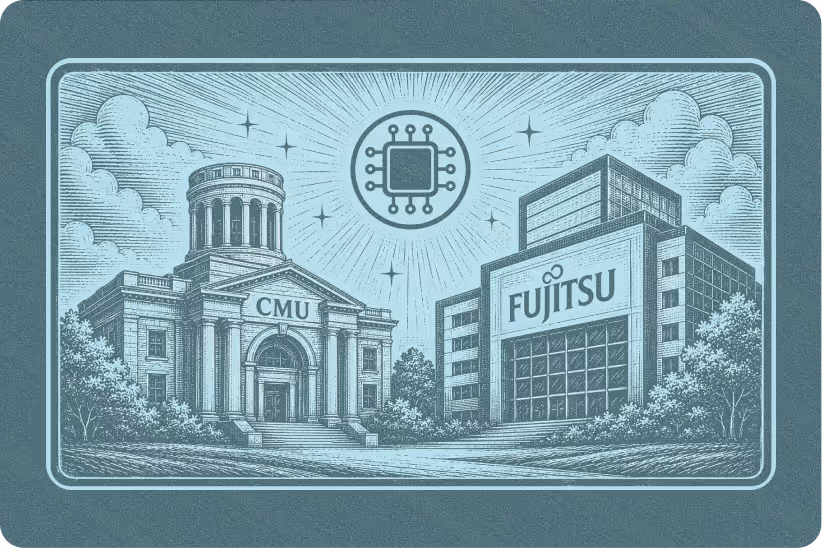
Artificial intelligence is moving beyond servers and screens. Carnegie Mellon University (CMU) and Fujitsu, a top Japanese IT provider, have partnered on an AI research center to revolutionize how machines interact with the physical world.
The Fujitsu-Carnegie Mellon Physical AI Research Center is devoted to creating AI-powered machines and robots that tackle critical issues like labor shortages and workplace safety. This groundbreaking partnership is a major leap toward bringing innovative physical AI solutions to real-world challenges.
This partnership demonstrates how embedding intelligence into real-world machines—and working together—drives true innovation across industries.
Bringing AI into the Physical World
Physical AI puts intelligence directly into robots and autonomous systems, allowing them to act, interact, and make decisions in the real world instead of just processing data behind screens.
With physical AI, machines can sense, decide, and act in real environments—handling obstacles and delicate tasks while making decisions on the spot. They move beyond computation to direct participation in the world.
Interest in physical AI is rapidly growing as experts turn to robotics and machine learning for practical solutions. The Fujitsu-CMU Center is the hub where these ideas become real-world innovations.
A State-of-the-Art Testing Ground
The research center is based at CMU’s advanced Robotics Innovation Center in Pittsburgh, offering top facilities for developing and testing physical AI systems.
The 150,000-square-foot facility equips researchers to rigorously develop and test physical AI systems, ensuring these machines are safe, reliable, and ready for real-world impact.
Solving the Global Labor Crisis
Global labor shortages are putting pressure on industries everywhere. Physical AI offers a real solution by enabling robots to handle repetitive or dangerous tasks, increasing productivity and safety while allowing people to focus on higher-value work.
Physical AI enables companies to boost productivity by deploying robots for repetitive or hazardous tasks, improving efficiency and workplace safety.
Physical AI empowers workers by handling tough, repetitive tasks. This lets people focus on safer, strategic roles and boosts overall efficiency.
Transforming Manufacturing and Logistics
Physical AI boosts manufacturing and logistics by helping robots quickly handle complex tasks like navigating warehouses, assembling parts, and managing inventory. This leads to faster, more reliable deliveries and efficient operations.
Unlike traditional robots, AI-powered machines quickly adapt to unexpected obstacles and changing environments.
These smart systems streamline tasks like loading, assembly, and inventory, making supply chains faster and more reliable.
Advancing Construction, Infrastructure, and Healthcare
Physical AI is revolutionizing construction, infrastructure, and healthcare by empowering robots to handle complex tasks, enhance safety, and support staff in critical roles.
In construction and infrastructure, robots handle heavy lifting, precise tasks, and structural inspections, improving safety and speeding up projects while preventing failures.
Physical AI also addresses healthcare staffing shortages by helping with patient transport, room cleaning, and supply management, allowing medical professionals to focus more on patient care.
The Power of Academic and Industry Partnerships
The Fujitsu-Carnegie Mellon Physical AI Research Center proves that major breakthroughs happen through strong academic and industry partnerships—achieving what neither could do alone.
Fujitsu brings deep IT expertise, while CMU leads in robotics, engineering, and AI research.
By combining CMU’s research innovation with Fujitsu’s industry know-how, this partnership rapidly turns groundbreaking AI and robotics ideas into real-world solutions that deliver real value.
Breaking Down Disciplinary Silos
Effective physical AI requires cross-disciplinary teamwork, combining expertise in engineering, robotics, language technologies, and ethics to tackle complex challenges.
Center experts in robotics, engineering, language technology, and ethics collaborate closely to ensure every physical AI system is advanced, safe, and reliable.
Why Collaboration and Standardization Matter
Physical AI still faces hurdles, like supply chain gaps and lack of standardization that keep robots and systems disconnected.
Without common standards and collaboration, physical AI systems stay isolated and can't scale across industries. The Fujitsu-CMU partnership is crucial for connecting these systems and enabling widespread adoption.
The Fujitsu-CMU partnership is driving physical AI forward by establishing standards and encouraging collaboration, making it easier for businesses to adopt and integrate smart machines across industries.
Building on a Legacy of AI Innovation
CMU advances AI by partnering with industry leaders to drive innovative research and real-world impact.
CMU’s recent collaboration with Bank of New York Mellon created a major AI Lab, while the university’s Learnvia platform now supports AI-driven learning at colleges nationwide.
Martial Hebert, dean of CMU’s School of Computer Science, says the new center strengthens CMU’s commitment to solving real-world problems through industry partnerships, ensuring innovations reach those who need them most.
Partner with FirstIgnite to Build the Future
The Fujitsu-Carnegie Mellon Physical AI Research Center proves that real progress comes from strong partnerships between industry and leading universities.
Partnering with leading institutions unlocks innovative AI and robotics solutions for your toughest business challenges.
Let FirstIgnite connect you with top academic partners to drive innovation and strategic growth.
Contact FirstIgnite to explore partnerships and accelerate innovation for your business.

.avif)
Connecting Industry & Academia
New Horizons
Hybrid Computing Trends & Innovations 2025
November 13, 2024
•
xx
MIN READ
As we approach 2025, computing is transforming rapidly with the rise of hybrid computing, a powerful blend of traditional on-premises infrastructure and cloud-based solutions that offers both scalability and flexibility. This article explores the latest trends and innovations in hybrid computing, from advancements in university research to practical applications within organizations, providing insights to keep you ahead of the curve.
Understanding the Latest Trends in Hybrid Computing
The hybrid computing landscape is evolving rapidly, driven by emerging technologies that cater to the diverse needs of modern organizations. A key trend is the integration of AI and machine learning, empowering systems to make smarter decisions, optimize resources, and adapt automatically to workload changes. Edge computing is adding real-time data processing closer to data sources, critical for sectors like manufacturing and healthcare. Additionally, hybrid cloud adoption is on the rise, allowing organizations to combine on-premises control with cloud scalability. Together, these advancements signal a future of enhanced flexibility, performance, and synergy across hybrid environments.
Innovations in Hybrid Computing for 2025
Advancements in hybrid computing in 2025 will introduce groundbreaking technologies that redefine data processing and storage. Quantum computing integration will tackle complex problems faster than ever, benefiting fields like cryptography and drug discovery. Serverless hybrid architectures will boost agility and cost-efficiency by scaling resources dynamically, while blockchain-powered hybrid systems will enhance data integrity and trust, essential for finance and supply chain sectors. Additionally, converged hybrid infrastructure will unify computing, storage, and networking, simplifying IT management. These innovations signal a transformative future for hybrid computing, offering unparalleled efficiency and flexibility.
University Hybrid Computing Advancements
The research and development happening in academic institutions around the world are playing a crucial role in shaping the future of hybrid computing. Universities are at the forefront of exploring new frontiers, pushing the boundaries of what's possible, and paving the way for the next generation of hybrid computing solutions. The University of Illinois Urbana-Champaign has developed Speculative Function-as-a-Service (SpecFaaS), a novel serverless computing model that speculatively executes functions to reduce application execution time, achieving a 4.6× speedup, 3.9× throughput increase, and 58.7% lower latency. In addition, University of Rochester researchers, led by Professor Stephen Wu, have developed hybrid phase-change memristors, combining the strengths of memristors and phase-change materials for fast, dense, low-power memory. By precisely straining 2D materials, they achieved a balance between crystal phases, overcoming limitations of current memory forms and promising ultra-efficient, high-speed computing.
Implementing Hybrid Computing in Your Organization
As hybrid computing evolves, organizations must strategically integrate these innovations into their IT infrastructure. Begin by assessing computing needs to balance on-premises and cloud resources, and develop a strategy that addresses data governance, security, and emerging technologies. Invest in skilled talent to manage hybrid environments, and implement robust monitoring and optimization using analytics and AI tools to ensure efficiency. Foster a culture of innovation that empowers employees to explore new technologies, positioning your organization for success in the dynamic world of hybrid computing.
Conclusion: Embracing the Future of Hybrid Computing in 2025
As we look ahead to 2025, the future of hybrid computing is nothing short of exhilarating. The convergence of cutting-edge technologies, such as AI, quantum computing, and blockchain, with the flexibility and scalability of hybrid computing, is poised to redefine the way we approach data processing and storage.
By embracing the future of hybrid computing, organizations can unlock new levels of agility, efficiency, and competitive advantage, positioning themselves for success in the rapidly evolving digital landscape of 2025 and beyond.
Connecting Industry & Academia
New Horizons
Exploring the Latest Extended Reality (XR) for Training in 2025
November 6, 2024
•
xx
MIN READ
As we look towards the future of education and training, one technology that has been gaining significant traction is Extended Reality (XR). XR is an umbrella term that encompasses Virtual Reality (VR), Augmented Reality (AR), and Mixed Reality (MR), all of which have the potential to revolutionize the way we learn and acquire new skills.
The benefits of XR training solutions
XR training solutions are transformative for education and professional development, offering key benefits such as increased engagement and retention through interactive, immersive environments. They provide safe, risk-free practice opportunities, especially valuable in fields like healthcare and aviation. Cost-effective and scalable, XR training eliminates logistical expenses and can be tailored to individual learning styles. Additionally, these technologies enhance remote collaboration, allowing learners to connect and share knowledge from anywhere.
The latest XR technology for training in 2025
As we look towards 2025, the advancements in XR technology are expected to be truly remarkable. Here are some of the latest XR technologies that will shape the future of training:
- Photorealistic VR: The development of high-resolution displays, advanced rendering techniques, and more powerful hardware will result in VR experiences that are virtually indistinguishable from reality, providing an even more immersive and realistic training environment.
- Haptic Feedback: Haptic technology, which simulates the sense of touch, will become more advanced and integrated into XR training solutions. This will allow learners to physically interact with virtual objects, further enhancing the realism and effectiveness of the training.
- Gaze-based Interaction: Eye-tracking technology will enable more intuitive and natural interaction within XR environments, allowing learners to control and navigate the virtual world using their gaze.
- Multimodal Interaction: The integration of voice commands, gesture recognition, and other natural interaction methods will make XR training more seamless and user-friendly.
- Artificial Intelligence (AI) and Machine Learning (ML): AI and ML will play a crucial role in personalizing XR training experiences, adapting the content and difficulty level to each learner's needs and progress.
Virtual Reality (VR) in education in 2025
VR is set to significantly impact education and training by 2025, with solutions becoming increasingly widespread in key areas. Immersive simulations will allow learners to master complex skills in safe environments, benefiting fields like medicine and engineering. Virtual field trips will enable exploration of remote locations and cultures without physical travel. Additionally, VR will enhance collaborative learning by facilitating teamwork in virtual classrooms and provide personalized training experiences through AI and ML. Finally, by engaging learners on emotional and sensory levels, VR will create memorable experiences that improve knowledge retention.
XR training advancements from universities
Universities worldwide are advancing XR training solutions, exemplified by Indiana University's Educational Innovation through Extended Reality Initiative (XRI), launched in 2021 to promote innovative teaching with XR technologies like Oculus Quest and MERGE Cubes. A key 2024 project within this initiative focuses on integrating XR into music technology education, fostering deeper connections between students and XR through enhanced curricula in music production and performance. Similarly, Notre Dame's XR for Learning Working Group explores XR's potential in education, offering support for designing immersive learning experiences and evaluating their effectiveness. Together, these efforts create engaging educational environments that prepare students for a future where digital and physical realities increasingly converge.
Augmented Reality (AR) training applications
While VR has garnered significant attention in training, Augmented Reality (AR) holds immense potential for enhancing learning and skill development. By 2025, we can expect various AR training applications, including real-time contextual guidance that overlays information onto the physical environment, enabling remote collaboration and mentoring for instant expert feedback. AR will also improve visualization of complex concepts and structures, facilitate gamified training experiences for increased engagement, and provide crucial support for maintenance and repair tasks through step-by-step instructions directly on the equipment.
Conclusion: The impact of XR training on the future of education and training
As we have explored, the advancements in XR technology will have a profound impact on the future of education and training. The benefits of XR training, such as increased engagement, improved safety, and personalized learning experiences, will make it an increasingly attractive option for educational institutions, corporate training programs, and individual learners alike. As we look towards the future, it's clear that XR training will play a crucial role in shaping the educational landscape.
Connecting Industry & Academia
New Horizons
Advanced Robotics: 2025 Breakthroughs & Innovations
October 30, 2024
•
xx
MIN READ
Advanced robotics merges cutting-edge technology, AI, and engineering to create intelligent machines that perform complex tasks with precision. Its applications, from industrial automation to healthcare, are reshaping how we live and work.
This article explores the latest breakthroughs, upcoming innovations, and the impact of robotics across industries, offering insights for tech enthusiasts, professionals, and curious readers alike.
Robotics Innovations to Look Out for in 2025
By 2025, advanced robotics will see transformative innovations, including:
- Hyper-Intelligent Robots: Enhanced AI will enable robots to solve complex problems, process natural language, and demonstrate creative thinking.
- Autonomous Mobility: Mobile robots equipped with advanced sensors and algorithms will navigate complex environments independently.
- Surgical Robotics: Precise, minimally invasive surgical robots will improve medical procedures, enhancing outcomes and reducing recovery times.
- Robotic Exoskeletons: Advanced exoskeletons will boost human strength, endurance, and mobility, transforming industries like manufacturing and healthcare.
- Swarm Robotics for Disaster Response: Swarm systems will assist in emergencies, navigating hazardous areas and supporting rescue operations.
- Soft Robotics for Delicate Tasks: Progress in soft robotics will lead to manipulators adept at handling fragile items, benefiting electronics, food processing, and healthcare.
These innovations will reshape industries, enhance human abilities, and foster seamless collaboration between robots and people.
University Advanced Robotics Innovations
Universities are advancing robotics with innovations like the University of Michigan's human-robot collaboration in search and rescue, autonomous systems, and NASA-supported Astrobees, providing astronauts with real-time feedback. Carnegie Mellon’s MetaMobility Lab, led by Dr. Inseung Kang, focuses on wearable robotics, developing AI-powered exoskeletons to enhance mobility for individuals with motor impairments, paving the way for smarter, adaptive assistive devices.
Applications of Advanced Robotics in Different Sectors
Advancements in robotics are set to revolutionize industries and transform daily life. In manufacturing, robotics boost efficiency, precision, and productivity, with future systems collaborating seamlessly with human workers. In healthcare, surgical robots and exoskeletons will improve patient outcomes, shorten recovery times, and enhance quality of life. Logistics will benefit from autonomous robots and warehouse automation, streamlining supply chains and reducing errors. Disaster response will leverage swarm and soft robotics to navigate hazardous environments and support rescue missions. In construction, robotic exoskeletons and autonomous equipment will improve safety and enable more complex projects. Agriculture will see automated planting, harvesting, and processing, enhancing productivity and sustainability. As these technologies evolve, they will drive innovation, improve efficiency, and enrich lives across the globe.
Conclusion: Looking Ahead to the Future of Advanced Robotics
As we've explored in this article, the world of advanced robotics is on the cusp of a remarkable transformation. The latest advancements in artificial intelligence, machine learning, and innovative robotic technologies are paving the way for a future where robots and humans work in seamless harmony, enhancing our capabilities, improving our quality of life, and pushing the boundaries of what's possible.
From hyper-intelligent robots capable of complex problem-solving to autonomous mobile systems that can navigate challenging environments, the innovations on the horizon are truly awe-inspiring. As these technologies continue to mature and find their way into various industries, we can expect to see a profound impact on fields ranging from healthcare and manufacturing to disaster response and exploration.
Blogs
Connecting Industry & Academia
The Rise of AI in Corporate : What It Means for Your Next Breakthrough
October 28, 2024
•
xx
MIN READ
The integration of Artificial Intelligence (AI) into corporate R&D is transforming innovation across sectors. AI is evolving from a tool to the backbone of modern R&D, helping organizations keep up with changing consumer preferences and technological advancements. By streamlining operations, enhancing creativity, and accelerating product development, AI plays a crucial role. Companies leveraging AI report a rise in innovative ideas, with many professionals now using it for research, underscoring its growing importance.
Understanding the Role of AI in R&D
The Evolution of R&D Practices
R&D has traditionally been time-consuming and costly, requiring constant iteration to meet evolving consumer expectations. To stay competitive, companies are turning to AI, which enhances the efficiency and effectiveness of R&D processes.
Key Advantages of AI Integration
- Accelerated Research Timelines: AI's ability to analyze vast datasets at unprecedented speeds allows researchers to identify patterns and generate insights rapidly. This capability is particularly beneficial in fields such as drug discovery, where time is of the essence.
- Enhanced Decision-Making: With AI-driven algorithms, R&D teams can make data-informed decisions, reducing risks and increasing the likelihood of successful outcomes. By optimizing experimental parameters and identifying promising research avenues, AI facilitates a more strategic approach to innovation.
- Increased Collaboration: AI tools can streamline communication and collaboration among teams, fostering a culture of innovation. By providing comprehensive, data-driven intelligence on emerging technologies, AI enables R&D professionals to work together more effectively.
Leveraging AI for Market Insights
Analyzing Research and Trends
One of the standout features of AI in R&D is its ability to sift through millions of research papers, patents, and industry reports. Platforms like FirstIgnite are designed specifically to help innovation teams unlock actionable insights from this vast pool of data. By providing real-time analysis, organizations can stay ahead of market trends and identify potential opportunities for innovation.
Predicting Market Trends
AI's predictive capabilities can be a game-changer for R&D teams. By analyzing historical data and current market conditions, AI can forecast future trends, enabling companies to align their innovation strategies with emerging consumer demands. This foresight can be crucial in maintaining a competitive edge in an ever-evolving marketplace.
Streamlining Collaboration Across Teams
Breaking Down Silos
In many organizations, R&D teams operate in silos, leading to inefficiencies and missed opportunities for collaboration. AI tools can bridge these gaps by providing a centralized platform for sharing insights and data. This collaborative approach not only enhances communication but also fosters a culture of innovation where ideas can flourish.
Comprehensive Data-Driven Intelligence
AI platforms equip R&D teams with comprehensive intelligence on emerging technologies. By streamlining access to critical information, these tools empower researchers to make informed decisions and develop innovative solutions that align with market needs.
The Future of AI in R&D
Continuous Evolution
As AI advances, its role in R&D will expand. Companies integrating AI into their innovation strategies will be better equipped to navigate market complexities, with AI-driven research, decision-making, and collaboration shaping future success.
Conclusion
The rise of AI in corporate R&D represents a paradigm shift in how organizations approach innovation. By streamlining research processes, enhancing decision-making, and fostering collaboration, AI is transforming the landscape of R&D. As companies continue to navigate the opportunities presented by AI, those that embrace this technology will be poised for success in an increasingly competitive environment.
Connecting Industry & Academia
New Horizons
Exploring the Latest Advancements in Digital Twins for 2025
October 22, 2024
•
xx
MIN READ
What are digital twins?
Digital twins are virtual representations of physical assets, processes, or systems that enable real-time monitoring, analysis, and optimization. Powered by data from sensors and simulations, they provide valuable insights for informed decision-making and operational enhancement. As we approach 2025, advancements in technology and cross-industry applications will further drive the evolution of digital twins, unlocking even greater transformative potential.
The concept of digital twins in 2025
By 2025, digital twins will transform into dynamic, adaptive, and predictive models, driven by advancements in AI, IoT, and real-time data. These enhanced digital replicas will simulate scenarios, anticipate changes, and provide actionable insights to optimize performance and decision-making. Integration with technologies like AR and VR will offer immersive, real-time interaction with digital twins, revolutionizing the way we design, operate, and maintain complex systems.
Digital twin advancements and innovations for 2025
By 2025, digital twin technology will see remarkable advancements. Key developments include increased data integration from IoT sensors and external sources, enabling more informed decision-making; advanced simulation capabilities for optimizing processes and predicting system behavior; and a crucial role in predictive maintenance to reduce downtime and extend asset lifespan. Digital twins will become more personalized and adaptive, tailored to users' needs, while fostering collaboration among stakeholders for optimized systems. Additionally, they will focus on sustainability, helping organizations reduce environmental impact and drive transformative change.
Role of Artificial Intelligence (AI) in digital twin technology
In 2025 and beyond, AI will be a crucial enabler of digital twin advancements, making them more intelligent, adaptive, and predictive. AI-powered predictive analytics will help anticipate equipment failures and optimize performance, while automated decision-making will allow digital twins to respond to changing conditions autonomously. AI will enhance asset management by optimizing utilization and extending asset lifespans, and self-learning digital twins will continuously improve their capabilities. AI will also facilitate multimodal data integration for more informed decisions and enable scenario planning to test strategies before real-world implementation, driving innovation across industries.
University Advancements in digital twins
In 2025, we can expect many new university advancements in digital twin technology, building on the progress seen in 2024. For example, the University of Florida's "Florida's Digital Twin" project is using AI and digital twin technology to create a virtual model of Jacksonville, allowing researchers to simulate climate and infrastructure scenarios for more sustainable urban planning. Additionally, Carnegie Mellon is offering a new course, "Principles of Digital Twins in Material Science and Advanced Manufacturing," where students will learn how digital twins are revolutionizing materials science through predictive analytics and virtual simulations. These examples highlight the transformative potential of digital twins in both urban planning and education.
Benefits of digital twins in various industries
In 2025, digital twins will transform industries by enabling real-time monitoring, predictive maintenance, and optimization. Manufacturing will benefit from improved design and reduced downtime, while healthcare will enhance personalized treatments and clinical trials. Smart cities will use digital twins to optimize infrastructure and services, and the energy sector will improve efficiency and grid resilience. Infrastructure projects will see more efficient design and maintenance, and aerospace will enhance safety and performance. In agriculture, digital twins will enable precision farming and optimize supply chains, driving innovation and sustainability across sectors.
Conclusion - the potential of digital twins in 2025 and beyond
As we look towards 2025 and beyond, the potential of digital twins is truly remarkable. This transformative technology will continue to evolve, driven by advancements in data integration, artificial intelligence, and cross-industry collaboration. Digital twins will become more intelligent, adaptive, and predictive, enabling organizations to make informed, data-driven decisions and drive sustainable change.
Connecting Industry & Academia
New Horizons
Exploring the Latest Telemedicine Advancements in 2024
October 16, 2024
•
xx
MIN READ
In 2024, the world of healthcare is undergoing a remarkable transformation, driven by the rapid advancements in telemedicine. I've been closely following the evolution of this dynamic field, and I'm excited to share my insights on the latest trends and innovations that are shaping the future of healthcare delivery.
Telemedicine, the practice of providing healthcare services remotely through the use of technology, has become an increasingly vital component of modern healthcare systems. In the wake of the global pandemic, the demand for remote healthcare solutions has skyrocketed, accelerating the adoption and development of cutting-edge telemedicine technologies.
Importance of Staying Updated with the Latest Telemedicine Trends
In the ever-evolving landscape of healthcare, it's crucial for both healthcare professionals and patients to stay informed about the latest telemedicine advancements. By keeping abreast of the latest trends and innovations, we can better understand the transformative potential of telemedicine and how it can improve patient outcomes, enhance healthcare accessibility, and streamline the delivery of medical services.
Key Telemedicine Technologies to Watch Out for in 2024
In 2024, several key technologies are transforming telemedicine. Augmented and Virtual Reality (AR/VR) enable virtual consultations, remote exams, and even surgeries with enhanced interactivity. Artificial Intelligence (AI) supports diagnosis and personalized treatment by analyzing patient data, improving care accuracy. The Internet of Medical Things (IoMT) allows continuous data collection and real-time monitoring via wearables and connected devices. Blockchain enhances data security and privacy in telemedicine consultations, while holographic telepresence brings life-sized, 3D interactions to remote healthcare, making the experience more immersive and engaging.
How Telemedicine Advancements are Transforming Healthcare Delivery
The advancements in telemedicine are not just incremental; they are catalyzing a fundamental shift in the way healthcare is delivered. By leveraging cutting-edge technologies, telemedicine is:
- Improving Access to Healthcare: Telemedicine is breaking down geographical barriers, making it easier for patients in remote or underserved areas to access quality healthcare services.
- Enhancing Patient Engagement: The convenience and personalization offered by telemedicine are empowering patients to take a more active role in their healthcare, leading to improved outcomes and better patient-provider relationships.
- Optimizing Healthcare Workflows: Telemedicine is streamlining healthcare workflows, reducing administrative burdens, and enabling healthcare providers to allocate their time and resources more efficiently.
- Reducing Healthcare Costs: By minimizing the need for in-person visits and reducing the associated travel and logistical expenses, telemedicine is helping to lower the overall cost of healthcare for both patients and healthcare systems.
University Telemedicine Advancements in 2024
In 2024, universities are driving telemedicine advancements through innovative curricula and research. Stanford and Harvard have integrated telemedicine-focused courses into their medical programs, preparing future healthcare providers to utilize emerging technologies. Meanwhile, Johns Hopkins and the University of Michigan lead research on the clinical efficacy and cost-effectiveness of telemedicine, shaping the next wave of remote healthcare solutions.
The Role of Artificial Intelligence in Telemedicine Advancements
The integration of AI and Machine Learning (ML) into telemedicine is transforming healthcare. AI-driven tools like chatbots offer symptom analysis and preliminary diagnoses, while predictive analytics help providers anticipate health risks and needs. AI also supports clinical decision-making, automates workflows, and enables personalized care recommendations tailored to individual patients. These advancements are streamlining telemedicine and improving both care delivery and outcomes.
Conclusion: Embracing the Future of Telemedicine in 2024
The year 2024 marks a pivotal moment in the evolution of telemedicine, as we witness the convergence of cutting-edge technologies, innovative healthcare solutions, and a growing emphasis on patient-centric care. By embracing the transformative potential of telemedicine, we can create a future where healthcare is more accessible, efficient, and personalized, ultimately leading to improved patient outcomes and a stronger, more resilient healthcare system.
Connecting Industry & Academia
New Horizons
Exploring 2024 Space Tourism Advancements
October 9, 2024
•
xx
MIN READ
Exploring the Latest Space Tourism Advancements in 2024
In 2024 the world of space tourism is undergoing a remarkable transformation. The advancements in this field are nothing short of awe-inspiring, and I am thrilled to take you on a journey through the latest developments that are shaping the future of commercial space travel.
Introduction to Space Tourism Advancements in 2024
In the past decade, we have witnessed a surge in private companies and government agencies alike, dedicating their efforts to making space exploration more accessible to the general public. From the successful launches of reusable rockets to the development of state-of-the-art spacecraft, the industry is poised to reach new heights in the coming year.
Role of Artificial Intelligence (AI) in Space Tourism
One of the most significant advancements in space tourism is the integration of AI technology, which optimizes flight paths, monitors spacecraft systems, and assists in training space tourists. This integration has improved safety and efficiency while creating new opportunities for personalized experiences. AI algorithms enable predictive maintenance by analyzing real-time spacecraft data to prevent potential issues, reducing the risk of delays or emergencies. Autonomous AI navigation systems enhance spacecraft piloting by making split-second decisions for a smoother journey. Additionally, AI-powered concierge services offer space tourists customized itineraries and virtual reality experiences to elevate their overall adventure.
Latest Innovations in Space Travel Technology
Advancements in space travel technology continue to reshape the industry, with 2024 marking a year of significant innovation. Reusable rockets are now reducing the cost of space travel, making it more accessible. Hyperloop-inspired spacecraft, utilizing magnetic levitation and high-speed propulsion, are driving faster and more efficient journeys. Meanwhile, advanced life support systems, featuring improved modules and closed-loop recycling, are ensuring greater safety and comfort for space tourists.
University Advancements in Space Tourism in 2024
The academic world is making significant strides in space tourism, with universities conducting innovative research. MIT is advancing propulsion systems with new fuel sources and engine designs, shaping the future of space travel. Brown University offers a course, "Space Tourism: The Science and Engineering Behind the Trend," where students explore the physics, materials, and human-body interactions required for space travel. The course covers topics from Newton's laws to nanotechnology and encourages students to design their own space travel methods while critically evaluating current approaches, providing a strong foundation in science and engineering.
The Impact of Space Tourism on the Economy and Environment
As the space tourism industry continues to evolve, it is crucial to consider the broader implications on the economy and the environment. In 2024, we can expect to see both positive and challenging aspects of this industry's growth.
On the economic front, the rise of space tourism is expected to create new job opportunities, drive innovation, and attract significant investment. However, the industry will also need to address concerns regarding the environmental impact of space travel, including the carbon footprint and the potential for increased space debris.
Exciting Developments in Space Tourism in 2024
2024 is shaping up to be a transformative year for space tourism, with the industry experiencing groundbreaking innovations. From the integration of AI technology to advancements in space travel, commercial space exploration is entering a new era of possibilities.
Connecting Industry & Academia
New Horizons
Exploring the Latest Voice-Activated Technology Advancements in 2024
October 2, 2024
•
xx
MIN READ
Introduction to Voice-Activated Technology
In the ever-evolving landscape of technology, one area that has witnessed remarkable advancements in recent years is the realm of voice-activated technology. From the humble beginnings of digital assistants like Siri, the field has now blossomed into a multi-faceted ecosystem, revolutionizing the way we interact with our devices and the digital world around us.
Voice-Activated Technology Advancements in 2024
In 2024, voice-activated technology will see major advancements, including multilingual capabilities that enhance global communication, improved contextual understanding and personalization for a more tailored user experience, and greater accuracy and reliability in speech recognition. These innovations will support seamless integration across various devices, from smartphones to smart home appliances, and expand functionality to handle complex tasks such as scheduling and creative applications.
AI Applications in Voice-Activated Technology
In 2024, AI will drive significant advancements in voice-activated technology. Natural Language Processing (NLP) will enhance understanding and response capabilities, while Machine Learning (ML) will improve system personalization and performance. AI will also enable seamless multimodal interactions, such as gesture and touch, and provide predictive capabilities to anticipate user needs. Additionally, advancements in emotional intelligence will allow these systems to better recognize and respond to human emotions, creating more natural and empathetic interactions.
University Advancements in Voice-Activated Technology in 2024
In 2024, significant advancements in voice-activated technology are emerging from universities like Western Michigan University (WMU) and Michigan State University (MSU). WMU, in collaboration with MSU, has received a National Science Foundation (NSF) Convergence Accelerator grant to enhance voice-activated AI accessibility for individuals who stutter or have other speech differences. This $5 million award supports the second phase of their project, focusing on reducing disparities in voice AI use and improving user experience for the stuttering community. Meanwhile, MSU's HeardAI project, also supported by the NSF, aims to create accessible and fair voice AI solutions. This initiative, led by a multidisciplinary team, includes developing realistic testbeds, compliance guidance, and accessible apps, with the goal of benefiting all users by refining voice AI technology and promoting inclusion.
The Impact of Voice-Activated Technology on Various Industries
In 2024, advancements in voice-activated technology will significantly impact various sectors. In healthcare, it will enable hands-free documentation and personalized care. In education, voice assistants will aid in research and personalized learning. Smart home systems will rely on voice commands for managing devices, while in automotive settings, drivers will use voice interactions for navigation and infotainment. The entertainment industry will see enhanced media consumption through voice-controlled platforms, and overall, voice-activated technology will improve accessibility for individuals with disabilities or language barriers.
Conclusion: Embracing the Future of Voice-Activated Technology
In 2024, the future of voice-activated technology is undoubtedly bright. The advancements we are about to witness will not only enhance our daily lives but also pave the way for a more intuitive, accessible, and interconnected digital landscape.
Connecting Industry & Academia
New Horizons
Green Energy Technology Advances 2024: AI & Solar Trends
September 25, 2024
•
xx
MIN READ
Introduction to Green Energy Technology
As we move towards a more sustainable future, green energy technology has become increasingly crucial. This article explores the latest advancements in green energy technology and how these innovations are shaping the way we power our world in 2024. By utilizing renewable energy sources like solar, wind, hydroelectric, geothermal, and biomass, these technologies reduce our reliance on fossil fuels and mitigate the environmental impact of energy production, paving the way for a cleaner and more sustainable future.
Latest Advancements in Green Energy Technology
In the rapidly evolving landscape of green energy technology, we have witnessed remarkable advancements in recent years, including improvements in solar panel efficiency and energy storage solutions. One significant advancement in 2024 is the development of perovskite solar cells, which have achieved conversion efficiencies of over 25% and offer the potential for lower manufacturing costs and increased flexibility. Additionally, advancements in wind energy, such as turbine design, blade materials, and control systems, have increased the efficiency and power output of wind farms. The integration of advanced sensors and data analytics has also improved the reliability and integration of wind energy into the grid.
AI Applications in Renewable Energy Innovations for 2024
The integration of artificial intelligence (AI) and machine learning (ML) has revolutionized renewable energy in 2024, with AI-powered solutions enhancing various aspects of green energy technology. AI is notably used in predictive maintenance, where algorithms analyze sensor data and historical performance to predict equipment failures and schedule maintenance, reducing downtime and improving efficiency. Additionally, AI-powered optimization algorithms enhance solar and wind energy systems by analyzing real-time data, weather forecasts, and grid conditions to maximize energy generation and grid integration.
University Green Energy Breakthroughs in 2024
In 2024, the academic and research community continues to drive innovation in green energy technology, with groundbreaking developments from leading universities. At MIT, a new redox flow battery using organic molecules promises higher energy density, longer cycle life, and lower costs compared to traditional lithium-ion batteries, potentially revolutionizing renewable energy storage and distribution. Meanwhile, researchers at the University of Oxford have advanced perovskite-based solar cells, achieving record-breaking efficiencies of over 28%, paving the way for their commercialization and potentially surpassing traditional silicon-based solar panels.
Applications of Green Technology in Various Industries
In 2024, green energy technology is driving sustainability across various industries, significantly impacting sectors beyond energy. In transportation, the rapid growth of electric vehicles (EVs), supported by advancements in battery technology, charging infrastructure, and vehicle-to-grid integration, is enhancing sustainability. The integration of renewable energy sources into EV charging networks further boosts this trend. In manufacturing, energy-efficient production processes, renewable energy utilization, and sustainable product designs are becoming standard, with companies increasingly adopting circular economy models to minimize environmental impact by repurposing or recycling waste and byproducts.
Conclusion: The Role of Green Energy Technology in Shaping a Sustainable Future in 2024
As we look towards the future, the advancements in green energy technology in 2024 hold immense promise for a more sustainable and environmentally-conscious world. The integration of cutting-edge innovations, such as AI-powered optimization, advanced energy storage solutions, and the widespread adoption of renewable energy sources, are paving the way for a cleaner and more resilient energy landscape.
Connecting Industry & Academia
Events
FirstIgnite to Showcase AI-Driven Tech Transfer Strategies at AUTM Western Meeting
September 20, 2024
•
xx
MIN READ
Exciting news! FirstIgnite is headed to Phoenix, AZ, for the AUTM 2024 Western Region Meeting on September 24-25. Be sure to attend our session, where our CEO will present “Maximizing Tech Transfer Success: Utilizing AI for Outbound Marketing Strategies” on September 24th. Additionally, our CEO will be speaking on “Latest Best Practices for Evaluating IP Disclosures: Leveraging Data and Government” on September 25th. This is a valuable opportunity to discover how AI-powered innovations can enhance your tech transfer efforts and boost your institution’s industry engagement.
FirstIgnite Background
Founded in January 2019, FirstIgnite is a venture-backed startup supported by Y-Combinator, Red Cedar Ventures, and Advisors Fund. Our mission is to transform the way intellectual property is marketed for research institutions. Using cutting-edge AI software, we streamline outbound communications, enabling you to effectively promote your research projects and establish meaningful collaborations.
Learn about a Revolutionary Approach to Increase Corporate Engagement
In an ever-competitive landscape where industries drive research and development funding, it’s crucial for tech transfer offices to seize opportunities by aligning strategies, systems, and execution. FirstIgnite provides the tools to connect your research with industry stakeholders already engaged in relevant fields, leveraging data sources like patents, job postings, and industry news. Our AI-driven tools simplify research summaries, conduct competitive analyses, find key contacts, and more. With FirstIgnite’s market research and lead generation capabilities, you can establish transformative collaborations, enhancing the efficiency and impact of your tech transfer efforts.
Don’t miss the chance to elevate your technology commercialization strategies. We look forward to connecting with you in Phoenix!
Session Information:
- September 24th, 12:45 PM – 2:00 PM
Maximizing Tech Transfer Success: Utilizing AI for Outbound Marketing Strategies - September 25th, 12:45 PM – 2:00 PM
Latest Best Practices for Evaluating IP Disclosures: Leveraging Data and Government
Connecting Industry & Academia
New Horizons
Neuromorphic Computing: Advancements in AI & Chips 2024
September 18, 2024
•
xx
MIN READ
Introduction to Neuromorphic Computing
In the ever-evolving landscape of technology, one field capturing the imagination of researchers and industry leaders alike is neuromorphic computing. This innovative approach to computing is inspired by the remarkable architecture and functionality of the human brain, seeking to emulate its energy-efficient and parallel processing capabilities. As we stand at the cusp of a new era, exploring the latest advancements in neuromorphic computing reveals how this technology is poised to reshape the future of artificial intelligence (AI) and beyond.
Understanding the Latest Advancements in Neuromorphic Computing
Over the past year, neuromorphic computing has seen groundbreaking advancements, with researchers leveraging cutting-edge materials, architectures, and algorithms to create more efficient, scalable, and versatile systems. Notable developments include novel neuromorphic chip designs incorporating memristive devices that mimic synaptic connections in the brain, enabling complex computations with significantly lower power consumption than traditional architectures. Additionally, progress in neuromorphic software and algorithms has led to more efficient and intuitive training of neural networks, enhancing the performance and accuracy of neuromorphic systems for real-world applications.
The Role of Neuromorphic Chips in Advancing AI
As AI evolves, neuromorphic computing is set to unlock its full potential by offering brain-inspired information processing. Neuromorphic chips, with their energy-efficient, parallel processing capabilities, perform complex computations while consuming much less energy than traditional AI hardware, crucial for applications like edge devices, mobile apps, and IoT systems. These chips excel in tasks suited to the brain's architecture, such as pattern recognition, sensory processing, and decision-making, enabling more efficient and accurate AI model training, enhancing performance in areas like computer vision, natural language processing, and predictive analytics.
University Advancements in Neuromorphic Computing in 2024
In 2024, universities globally have made significant strides in neuromorphic computing, advancing both research and practical applications. Cornell Tech has teamed up with BrainChip to offer a new course in neuromorphic computing, integrating this technology into their graduate program through the University AI Accelerator Program. Western Sydney University's International Centre for Neuromorphic Systems focuses on mimicking biological brains to engineer efficient artificial neural networks and sensors for diverse applications. Meanwhile, Purdue University's Center for Brain-inspired Computing (C-BRIC) is advancing cognitive computing with a $32 million project aimed at developing neuro-inspired algorithms and neuromorphic hardware to enable autonomous intelligent systems. These initiatives highlight the global advancements in neuromorphic computing across various institutions.
Applications of Neuromorphic Computing in Various Industries
Neuromorphic computing is transforming multiple industries with its diverse applications. In healthcare, it enables real-time disease diagnosis, personalized drug discovery, and intelligent prosthetics through its ability to analyze large datasets and detect patterns. In autonomous vehicles, neuromorphic chips enhance safety by processing sensory data and making split-second decisions. Robotics and automation benefit from neuromorphic systems' efficiency and adaptability, improving tasks in manufacturing and logistics. Energy-efficient neuromorphic technology supports sustainability in smart grids and renewable energy management. Additionally, in cybersecurity, it aids in developing advanced threat detection and anomaly recognition systems. As neuromorphic computing evolves, its innovative applications are set to drive significant advancements across various fields.
Conclusion: The Promising Future of Neuromorphic Computing in 2024
As we look towards the future, the promise of neuromorphic computing in 2024 and beyond is truly exciting. This technology has the potential to revolutionize the way we approach computing, artificial intelligence, and a wide range of real-world applications.
The advancements made in neuromorphic chip design, neuromorphic software, and neuromorphic learning algorithms have laid the foundation for a new era of intelligent and energy-efficient computing. By harnessing the power of brain-inspired architectures, neuromorphic systems can tackle complex tasks with greater efficiency, accuracy, and adaptability than ever before.