


RESOURCES
Blogs
Insights, strategies, and updates on research commercialization, university innovation, industry partnerships, and AI-powered prospecting
Connecting Industry & Academia
CMU and Fujitsu Launch Physical AI Research Center
April 27, 2026
•
xx
MIN READ
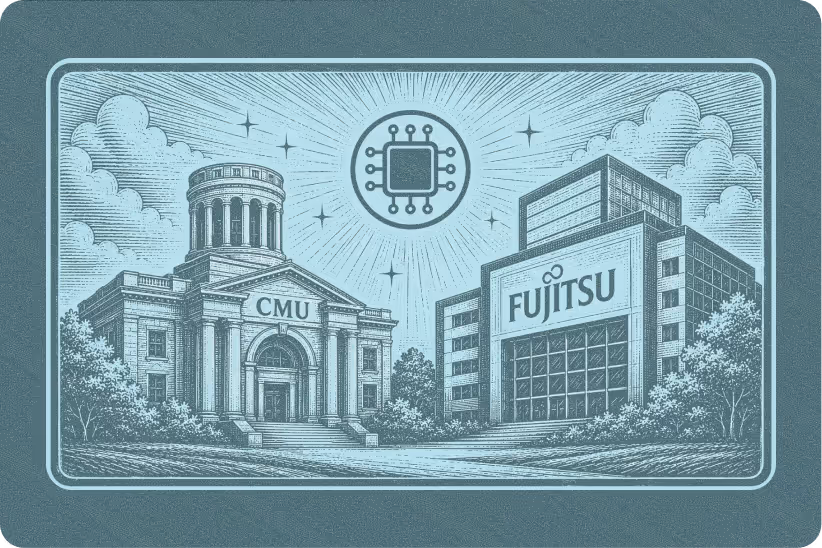
Artificial intelligence is moving beyond servers and screens. Carnegie Mellon University (CMU) and Fujitsu, a top Japanese IT provider, have partnered on an AI research center to revolutionize how machines interact with the physical world.
The Fujitsu-Carnegie Mellon Physical AI Research Center is devoted to creating AI-powered machines and robots that tackle critical issues like labor shortages and workplace safety. This groundbreaking partnership is a major leap toward bringing innovative physical AI solutions to real-world challenges.
This partnership demonstrates how embedding intelligence into real-world machines—and working together—drives true innovation across industries.
Bringing AI into the Physical World
Physical AI puts intelligence directly into robots and autonomous systems, allowing them to act, interact, and make decisions in the real world instead of just processing data behind screens.
With physical AI, machines can sense, decide, and act in real environments—handling obstacles and delicate tasks while making decisions on the spot. They move beyond computation to direct participation in the world.
Interest in physical AI is rapidly growing as experts turn to robotics and machine learning for practical solutions. The Fujitsu-CMU Center is the hub where these ideas become real-world innovations.
A State-of-the-Art Testing Ground
The research center is based at CMU’s advanced Robotics Innovation Center in Pittsburgh, offering top facilities for developing and testing physical AI systems.
The 150,000-square-foot facility equips researchers to rigorously develop and test physical AI systems, ensuring these machines are safe, reliable, and ready for real-world impact.
Solving the Global Labor Crisis
Global labor shortages are putting pressure on industries everywhere. Physical AI offers a real solution by enabling robots to handle repetitive or dangerous tasks, increasing productivity and safety while allowing people to focus on higher-value work.
Physical AI enables companies to boost productivity by deploying robots for repetitive or hazardous tasks, improving efficiency and workplace safety.
Physical AI empowers workers by handling tough, repetitive tasks. This lets people focus on safer, strategic roles and boosts overall efficiency.
Transforming Manufacturing and Logistics
Physical AI boosts manufacturing and logistics by helping robots quickly handle complex tasks like navigating warehouses, assembling parts, and managing inventory. This leads to faster, more reliable deliveries and efficient operations.
Unlike traditional robots, AI-powered machines quickly adapt to unexpected obstacles and changing environments.
These smart systems streamline tasks like loading, assembly, and inventory, making supply chains faster and more reliable.
Advancing Construction, Infrastructure, and Healthcare
Physical AI is revolutionizing construction, infrastructure, and healthcare by empowering robots to handle complex tasks, enhance safety, and support staff in critical roles.
In construction and infrastructure, robots handle heavy lifting, precise tasks, and structural inspections, improving safety and speeding up projects while preventing failures.
Physical AI also addresses healthcare staffing shortages by helping with patient transport, room cleaning, and supply management, allowing medical professionals to focus more on patient care.
The Power of Academic and Industry Partnerships
The Fujitsu-Carnegie Mellon Physical AI Research Center proves that major breakthroughs happen through strong academic and industry partnerships—achieving what neither could do alone.
Fujitsu brings deep IT expertise, while CMU leads in robotics, engineering, and AI research.
By combining CMU’s research innovation with Fujitsu’s industry know-how, this partnership rapidly turns groundbreaking AI and robotics ideas into real-world solutions that deliver real value.
Breaking Down Disciplinary Silos
Effective physical AI requires cross-disciplinary teamwork, combining expertise in engineering, robotics, language technologies, and ethics to tackle complex challenges.
Center experts in robotics, engineering, language technology, and ethics collaborate closely to ensure every physical AI system is advanced, safe, and reliable.
Why Collaboration and Standardization Matter
Physical AI still faces hurdles, like supply chain gaps and lack of standardization that keep robots and systems disconnected.
Without common standards and collaboration, physical AI systems stay isolated and can't scale across industries. The Fujitsu-CMU partnership is crucial for connecting these systems and enabling widespread adoption.
The Fujitsu-CMU partnership is driving physical AI forward by establishing standards and encouraging collaboration, making it easier for businesses to adopt and integrate smart machines across industries.
Building on a Legacy of AI Innovation
CMU advances AI by partnering with industry leaders to drive innovative research and real-world impact.
CMU’s recent collaboration with Bank of New York Mellon created a major AI Lab, while the university’s Learnvia platform now supports AI-driven learning at colleges nationwide.
Martial Hebert, dean of CMU’s School of Computer Science, says the new center strengthens CMU’s commitment to solving real-world problems through industry partnerships, ensuring innovations reach those who need them most.
Partner with FirstIgnite to Build the Future
The Fujitsu-Carnegie Mellon Physical AI Research Center proves that real progress comes from strong partnerships between industry and leading universities.
Partnering with leading institutions unlocks innovative AI and robotics solutions for your toughest business challenges.
Let FirstIgnite connect you with top academic partners to drive innovation and strategic growth.
Contact FirstIgnite to explore partnerships and accelerate innovation for your business.

Connecting Industry & Academia
Blogs
July 30, 2026
•
xx
MIN READ
University-industry partnerships have never been more important. As universities face growing pressure to diversify funding, demonstrate research impact, and accelerate innovation, collaboration with industry has become a strategic priority rather than a nice-to-have.
Yet building these partnerships remains one of the most resource-intensive challenges universities face. Relationship building has traditionally relied on personal networks, manual research, and reactive outreach, making it difficult to scale across thousands of researchers and millions of potential industry collaborators.
Artificial intelligence is changing that.
Rather than replacing relationship building, AI is helping universities become more strategic, proactive, and data-driven in how they identify, prioritize, and develop industry partnerships.
The Challenge with Traditional Partnership Development
Most university partnership teams are working with limited staff while supporting hundreds or even thousands of faculty members.
As a result, partnership development often looks like this:
- Waiting for faculty to request industry support
- Relying on existing corporate relationships
- Spending hours researching companies manually
- Missing emerging market opportunities
- Reacting to partnership requests instead of creating them
This reactive model limits both the number and quality of partnerships universities can pursue.
AI Helps Universities Find the Right Partners Faster
One of AI's biggest advantages is its ability to analyze enormous amounts of information in minutes.
Instead of manually searching through company websites, publications, patents, funding announcements, and industry news, AI can identify organizations that align with a university's research strengths almost instantly.
Rather than simply generating long lists of companies, modern AI platforms evaluate factors such as:
- Research alignment
- Technology interests
- Innovation priorities
- Previous university collaborations
- Geographic strategy
- Commercial relevance
This allows partnership teams to spend less time searching and more time building meaningful relationships.
Moving from Reactive to Proactive Engagement
Perhaps the biggest shift AI enables is moving universities from reactive engagement to proactive outreach.
Instead of waiting for opportunities to appear, teams can proactively identify:
- Companies investing in relevant technologies
- Emerging industries aligned with faculty expertise
- Organizations hiring in strategic research areas
- Businesses filing patents related to university discoveries
- Companies expanding R&D initiatives
This gives partnership teams a continuous pipeline of potential collaborations rather than relying on inbound interest alone.
Supporting Faculty at Scale
Faculty are at the center of successful university-industry partnerships, but many researchers are unaware of the companies that could benefit from their work.
AI makes it easier for partnership offices to support researchers by automatically surfacing relevant opportunities based on their publications, patents, and areas of expertise.
Instead of generic recommendations, universities can provide researchers with highly targeted partnership suggestions that are aligned with their work.
This creates more productive conversations and helps faculty see the value of engaging with industry earlier in the research lifecycle.
Better Data Leads to Better Decisions
Partnership teams generate enormous amounts of data across meetings, outreach efforts, company interactions, and research activities.
Without AI, much of this information remains disconnected across spreadsheets, CRMs, email inboxes, and institutional systems.
AI helps connect these data sources to answer questions like:
- Which companies are already engaged across campus?
- Which relationships are growing?
- Which industries are underrepresented?
- Where are the strongest commercialization opportunities?
- Which faculty have high industry engagement potential?
Instead of relying on intuition, universities can make partnership decisions based on real-time insights.
Strengthening Long-Term Relationships
Successful partnerships don't end after the first meeting.
AI can help institutions maintain momentum by tracking engagement, identifying follow-up opportunities, recommending next actions, and highlighting new developments within partner organizations.
This allows partnership managers to spend more time having meaningful conversations and less time managing administrative tasks.
The result is stronger, longer-lasting relationships built on timely engagement.
AI Will Not Replace Human Relationships
One of the biggest misconceptions about AI is that it replaces relationship management.
It doesn't.
Successful university-industry partnerships will always depend on trust, shared goals, and human collaboration.
AI simply removes much of the manual work that prevents partnership professionals from focusing on those relationships.
By automating research, surfacing opportunities, and organizing information, AI gives teams more time to do what they do best: connect people and build partnerships that create real impact.
The Future of University Partnerships Is Intelligence-Driven
As competition for industry collaboration continues to grow, universities that rely solely on traditional partnership development methods risk falling behind.
The future belongs to institutions that can combine human expertise with AI-powered intelligence to identify opportunities earlier, engage researchers more effectively, and build stronger industry relationships.
AI isn't changing the importance of university-industry partnerships. It's changing how universities discover, develop, and scale them.
For institutions looking to increase research impact, expand corporate engagement, and accelerate commercialization, AI is quickly becoming an essential part of the partnership strategy.
See How FirstIgnite Helps Universities Build Better Partnerships
FirstIgnite helps universities proactively identify industry partners, uncover collaboration opportunities, engage faculty, and manage relationships with AI-powered intelligence.
If you're ready to modernize your university-industry partnership strategy, book a demo to see how FirstIgnite can help your team discover more opportunities and build stronger partnerships.

Blogs
Connecting Industry & Academia
The Outreach Gap: Why Great Research Doesn't Always Reach the Right Industry Partners
July 28, 2026
•
xx
MIN READ
Universities produce groundbreaking research every day. But breakthrough innovation doesn't create impact unless it reaches the organizations that can bring it to market.
Every year, universities invest billions of dollars in research. New discoveries emerge across engineering, healthcare, agriculture, energy, AI, and countless other disciplines. Yet despite the strength of this innovation pipeline, many promising technologies never find the right commercial partner.
The challenge isn't always the quality of the research.
It's the quality of the outreach.
Great Technologies Don't Sell Themselves
Technology transfer professionals know that commercialization is rarely about waiting for companies to discover a patent.
Successful commercialization happens because someone identifies the right partner, understands their strategic priorities, initiates a conversation, and nurtures that relationship over time.
The difficulty is scale.
A single technology transfer office may manage hundreds of active disclosures while thousands of companies could represent potential licensing or research partners. Finding the right fit requires more than searching LinkedIn or relying on existing contacts.
Without a scalable outreach strategy, excellent research often remains undiscovered.
The Cost of the Outreach Gap
Every missed connection represents more than a lost licensing opportunity.
It can mean:
- Delayed commercialization
- Missed sponsored research opportunities
- Fewer startup collaborations
- Reduced industry engagement
- Less societal impact from publicly funded research
Faculty may assume there isn't market interest when, in reality, the right companies were simply never identified.
Industry leaders may never realize a solution exists because no one reached out.
The innovation is there.
The connection isn't.
Why Traditional Outreach Doesn't Scale
Many commercialization teams still rely on manual workflows.
An analyst searches for companies.
Someone builds a spreadsheet.
Outreach emails are sent individually.
Responses are tracked across inboxes.
New discoveries restart the entire process.
This approach worked when portfolios were smaller. Today's innovation ecosystems demand something different.
Commercialization teams aren't short on expertise.
They're short on time.
Smarter Outreach Starts with Better Intelligence
The most effective outreach isn't about contacting more companies.
It's about contacting the right companies.
That requires understanding:
- Which organizations are actively investing in a specific technology area
- Existing university relationships with those companies
- Prior licensing or sponsored research activity
- Strategic initiatives and business priorities
- Decision-makers most likely to engage
When this intelligence is available before outreach begins, conversations become more relevant, personalized, and productive.
Instead of casting a wide net, commercialization teams can focus their efforts where they have the highest likelihood of success.
AI Is Closing the Gap
Artificial intelligence is changing how universities identify and engage industry partners.
Rather than spending days researching potential licensees, AI can analyze technologies, identify organizations with strong commercial alignment, surface existing institutional relationships, and recommend the next best opportunities.
This doesn't replace business development.
It amplifies it.
Technology transfer professionals still build the relationships. AI simply removes the manual research that has traditionally slowed the process.
The result is faster outreach, stronger conversations, and more opportunities for commercialization.
Outreach Is No Longer Just About Finding Companies
The institutions seeing the greatest commercialization success aren't simply sending more emails.
They're building repeatable systems for identifying opportunities, coordinating engagement across campus, and continuously expanding their network of industry partners.
Outreach has evolved from a tactical activity into a strategic capability.
Universities that embrace data-driven relationship intelligence will be better positioned to accelerate licensing, sponsored research, startups, and long-term industry collaboration.
Because great research deserves more than publication.
It deserves the right partner.
Close the Outreach Gap with FirstIgnite
Finding the right industry partners shouldn't depend on manual research and disconnected spreadsheets.
Book a personalized demo with FirstIgnite to see how AI-powered market intelligence, relationship intelligence, and automated partner discovery help universities identify the best-fit companies, streamline outreach, and accelerate research commercialization.
Connecting Industry & Academia
Blogs
Beyond Contact Management: Why Research Commercialization Needs a Smarter CRM Strategy
July 23, 2026
•
xx
MIN READ
Universities don't struggle with a lack of relationships. They struggle with making sense of them.
Every technology transfer office, corporate engagement team, research development office, and advancement department is managing hundreds or even thousands of interactions with companies, investors, faculty, entrepreneurs, and funding organizations. Yet many institutions still rely on CRMs built to store contacts instead of helping teams build strategic partnerships.
As research commercialization becomes increasingly collaborative and data-driven, traditional CRM systems are falling behind.
The Problem with Traditional CRMs
Most CRM platforms were designed for sales teams. Their purpose is simple: track prospects, log activities, and move opportunities through a pipeline.
University innovation ecosystems work differently.
Commercialization isn't a linear sales process. A single company might:
- Sponsor research in one department
- License technology from another
- Recruit students on campus
- Employ alumni
- Donate through advancement
- Participate in an accelerator or innovation program
These relationships rarely live in one place. Instead, they're scattered across spreadsheets, inboxes, disconnected CRMs, and individual staff knowledge.
When relationship intelligence is fragmented, opportunities are missed.
Commercialization Depends on Context
The most valuable question isn't "Who is this company?"
It's "How is our institution already connected to them?"
Before reaching out to a potential licensing partner, teams should know:
- Which faculty members have existing relationships
- Previous meetings across departments
- Past sponsored research agreements
- Licensing history
- Alumni connections
- Corporate giving activity
- Existing collaborations underway
Without this context, outreach becomes slower, less personalized, and less likely to succeed.
With it, every conversation starts from a position of strength.
Relationship Intelligence Creates Better Decisions
Research commercialization requires dozens of strategic decisions every week.
Which companies are the best licensing candidates?
Who should we introduce this faculty member to?
Which organizations are already engaged elsewhere across campus?
Where should our business development team focus next?
A modern CRM should answer these questions automatically, not require hours of manual research.
Instead of simply recording activity, the platform should surface opportunities, identify hidden connections, and recommend the next best action.
That's the difference between managing contacts and managing relationships.
AI Is Changing the Role of the CRM
Artificial intelligence is transforming commercialization workflows, but its impact depends on the quality of the underlying data.
If institutional knowledge lives in disconnected systems, AI has limited context to work with.
When relationship data, engagement history, market intelligence, and commercialization activity are connected, AI becomes significantly more valuable. Teams can identify partnership opportunities faster, prioritize outreach more effectively, and make better-informed decisions without adding administrative work.
The future of CRM isn't about replacing relationship managers.
It's about giving them the intelligence they need to spend more time building partnerships and less time searching for information.
A CRM Built for University Partnerships
Universities need more than another database.
They need a platform designed around how research commercialization actually happens.
That means connecting people, technologies, companies, projects, funding opportunities, and institutional knowledge into a single ecosystem that helps every team make smarter decisions.
When relationship intelligence becomes accessible across the institution, commercialization accelerates naturally. Teams collaborate more effectively, outreach becomes more strategic, and opportunities that once remained hidden become visible.
The institutions leading the next decade of innovation won't simply have more contacts.
They'll have a better understanding of their relationships.
Ready to Modernize Your Commercialization Strategy?
If your team is still using a CRM built for traditional sales instead of university partnerships, it may be time for a different approach.
Book a personalized demo with FirstIgnite to see how a CRM purpose-built for higher education helps you uncover existing relationships, coordinate engagement across campus, and identify new commercialization opportunities with AI-powered relationship intelligence.
Connecting Industry & Academia
How the University of Bristol Is Using AI to Build More Proactive Industry Partnerships
July 21, 2026
•
xx
MIN READ
Why Universities Need a More Proactive Approach
Universities are under increasing pressure to diversify revenue, strengthen research impact, and build meaningful industry partnerships. But many partnership teams still rely on reactive engagement, waiting for companies to reach out or depending on existing networks.
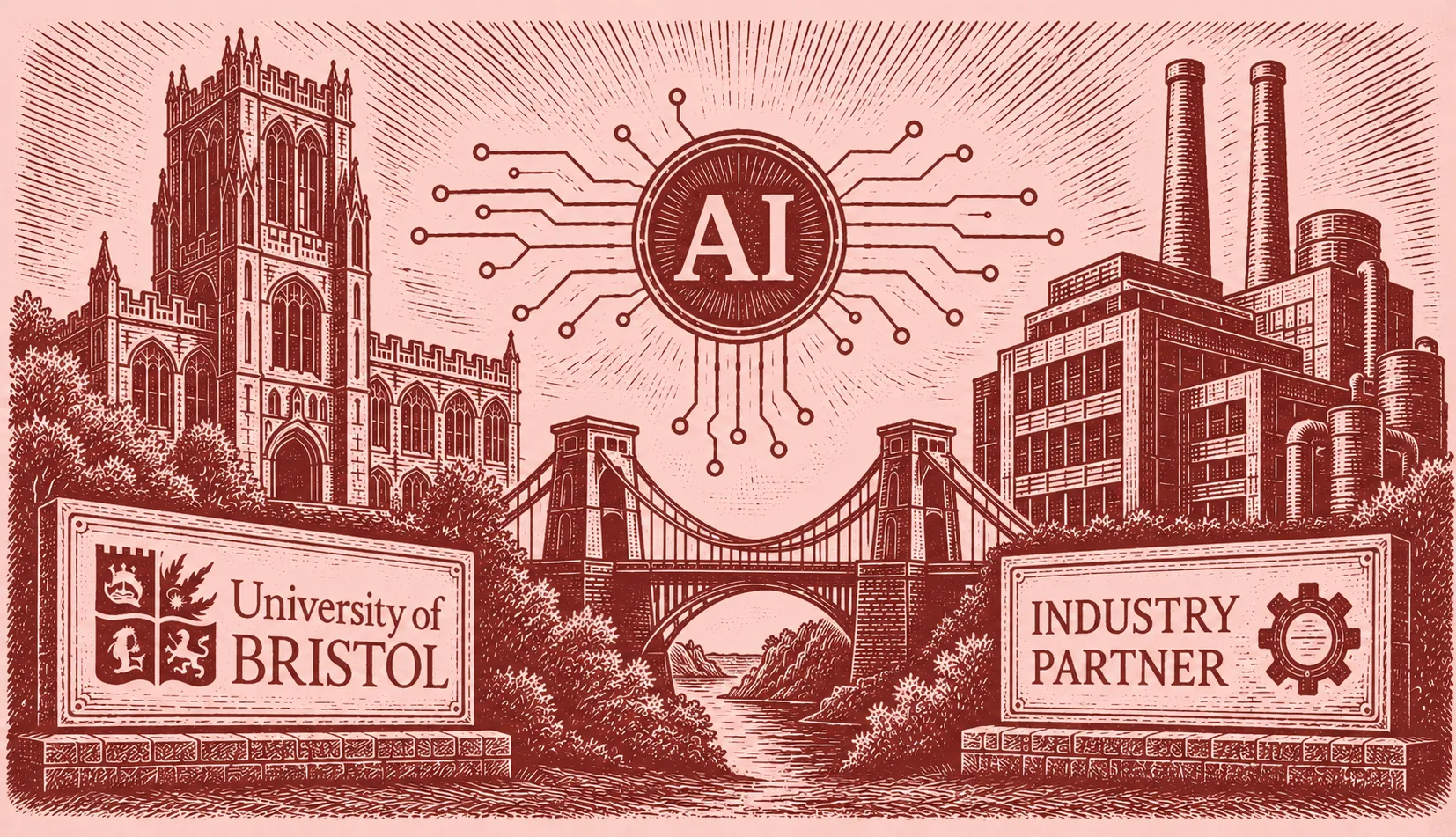
In a recent webinar, University of Bristol shared how they're changing that approach with FirstIgnite, using AI to proactively identify industry partners, uncover new markets, and help academics connect their research with real-world opportunities.
Bridging the Gap Between Academia and Industry
One of the biggest challenges universities face is that researchers and industry often speak different languages.
Industry is focused on solving commercial problems and developing products, while academics are focused on advancing new knowledge and publishing novel research. That disconnect can make it difficult to identify collaboration opportunities.
By analyzing publications, invention disclosures, and research initiatives, FirstIgnite helps translate academic research into industry-relevant opportunities, making it easier to identify organizations that are actively working in related areas.
As Shelby Temple, Head of Industry Partnerships at the University of Bristol, explained, showing academics where their research fits within industry helps "break the ice" and gives them confidence to begin external engagement.
Turning Research Into Partnership Opportunities
Instead of manually searching for potential collaborators, Bristol's team uses FirstIgnite to quickly generate:
- Companies aligned with a research area
- Relevant decision-makers and contacts
- Alumni connections
- Market reports highlighting adjacent industries
- New commercialization opportunities
During the webinar, Shelby shared an example where a single research project generated approximately 800 potential contacts, leading to around 150 qualified outreach opportunities.
The platform also revealed markets the research team had not originally considered, expanding opportunities beyond their initial focus.
Supporting Academics with Actionable Insights
Rather than simply generating a list of companies, FirstIgnite explains why each organization is relevant through explainable AI and confidence scoring.
This gives partnership teams and researchers greater confidence in the recommendations while making it easy to filter out less relevant matches.
As Shelby noted:
"That is where FirstIgnite really helped us."
Providing clear reasoning behind recommendations helps researchers better understand the commercial potential of their work and makes industry engagement feel more approachable.
Opening the Funnel for Industry Engagement
Perhaps the biggest impact isn't simply finding more companies. It's allowing partnership teams to spend less time searching and more time building relationships.
Instead of hours of manual research, staff can quickly identify qualified organizations, prepare for outreach, and begin conversations with potential collaborators.
As Shelby explained during the webinar:
"We can free up a lot more time... and open up the funnel."
The result is a more proactive partnership strategy that increases opportunity flow while helping universities better support research commercialization and external engagement.
Watch the Webinar Recording
Want to hear directly from the University of Bristol about how they're using AI to strengthen industry partnerships?
Or, if you'd like to see how FirstIgnite could support your institution, schedule a personalized demo with our team.

Events
CASE Summit for Leaders in Advancement 2026
July 16, 2026
•
xx
MIN READ
Join FirstIgnite at the CASE Summit for Leaders in Advancement 2026
July 20–22, 2026
Seattle, Washington
The CASE Summit for Leaders in Advancement 2026 brings together senior advancement leaders from around the world to discuss the strategies, leadership practices, and innovations shaping the future of institutional advancement.
FirstIgnite is excited to attend this year's Summit in Seattle and connect with advancement professionals focused on strengthening alumni engagement, corporate partnerships, donor relationships, and institution-wide collaboration through better data and AI.
Advancement success depends on having a complete view of institutional relationships. FirstIgnite helps universities connect engagement data across advancement, research, corporate relations, career services, and technology transfer so teams can uncover new opportunities, strengthen strategic partnerships, and make more informed decisions.
Whether you're looking to identify new corporate partners, better engage alumni, support fundraising initiatives, or improve collaboration across campus, we'd love to show you how FirstIgnite helps institutions build stronger relationships that drive measurable impact.
Schedule a Meeting
Attending the CASE Summit for Leaders in Advancement 2026? Meet with the FirstIgnite team to see how universities are using AI-powered relationship intelligence to strengthen advancement efforts, identify new partnership opportunities, and improve collaboration across campus.
Connecting Industry & Academia
Blogs
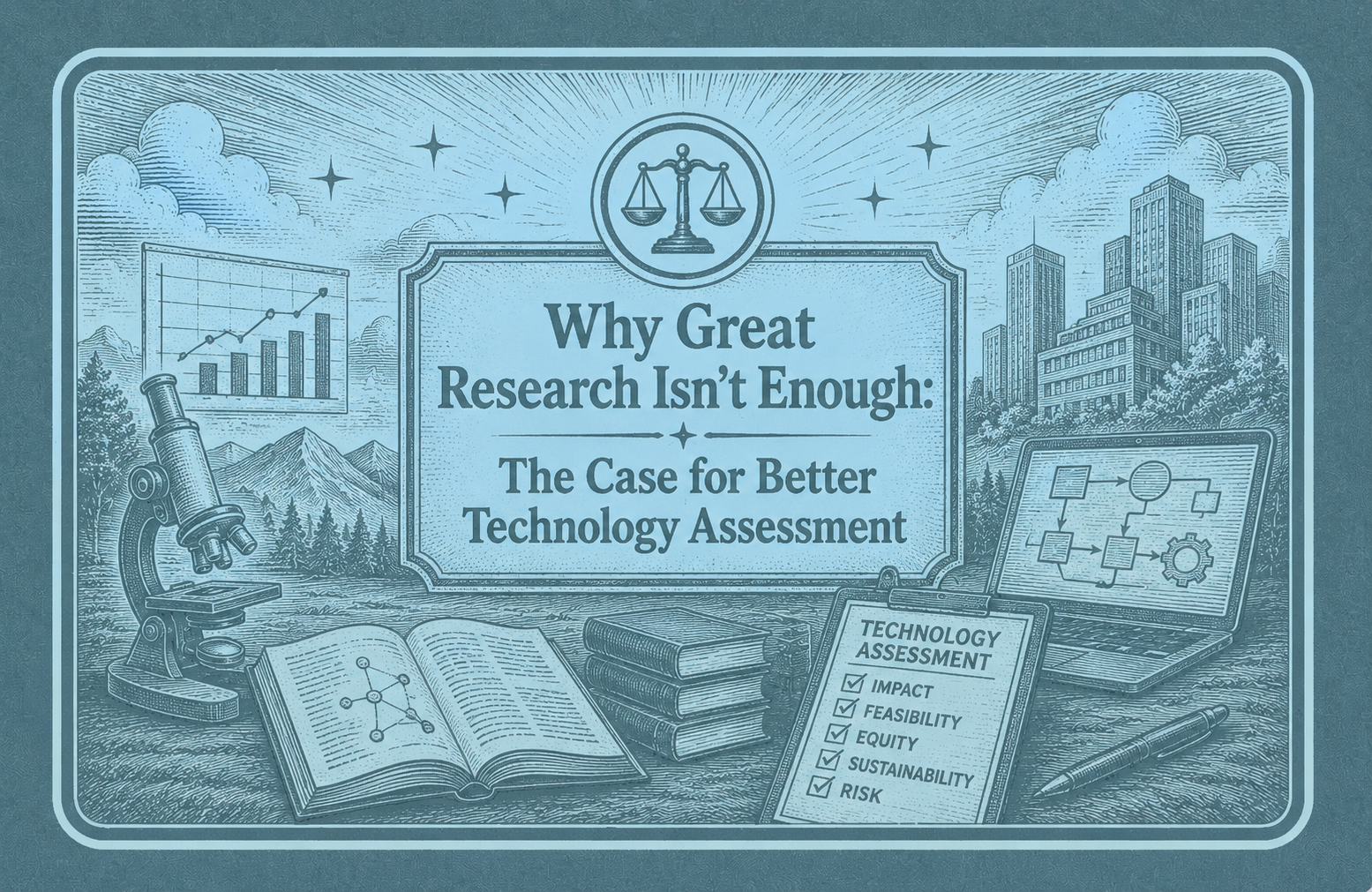
Why Great Research Isn't Enough: The Case for Better Technology Assessment
July 14, 2026
•
xx
MIN READ
Every university is producing groundbreaking research.
New discoveries are made every day. Faculty continue to push the boundaries of science, engineering, medicine, and technology. Yet despite the quality of research being generated, many promising innovations never make it beyond the lab.
The reason isn't always the technology itself.
Often, the challenge is understanding its commercial potential early enough to make informed decisions.
Great Research Doesn't Automatically Become Great Innovation
A breakthrough discovery may solve a significant scientific problem, but commercialization requires answering a completely different set of questions:
- Is there a market that needs this solution?
- How does it compare to existing technologies?
- What industries are most likely to adopt it?
- Is the technology mature enough for licensing or investment?
- What regulatory hurdles exist?
- Which companies are the best commercialization partners?
Without answers to these questions, technology transfer teams are forced to rely on limited information, intuition, or time-consuming manual research.
As research portfolios continue to grow, this approach becomes increasingly difficult to scale.
Technology Assessment Bridges the Gap
Technology assessment transforms a promising invention into a commercialization opportunity by combining technical evaluation with market intelligence.
Rather than simply reviewing an invention disclosure, a comprehensive assessment provides a clearer understanding of:
- Commercial viability
- Market demand
- Competitive landscape
- Technology readiness
- Licensing potential
- Industry fit
- Commercialization risks
This information allows commercialization professionals to prioritize the innovations with the greatest potential while identifying the best path forward for each technology.
Better Decisions Lead to Better Outcomes
Technology transfer offices face constant pressure to maximize the impact of limited resources.
Not every invention requires the same commercialization strategy. Some technologies are ready for immediate industry outreach. Others may benefit from additional research, new intellectual property, or different market positioning.
A strong technology assessment helps teams:
- Prioritize high-potential inventions
- Allocate staff time more effectively
- Support stronger patenting decisions
- Identify industry partners earlier
- Build more compelling licensing strategies
- Increase confidence when engaging researchers, investors, and companies
Instead of reacting after a patent is filed, institutions can make more informed commercialization decisions from the beginning.
The Growing Role of AI
Traditional technology assessments often require hours or even days of manual research.
Today's AI-powered tools can dramatically accelerate this process by analyzing scientific literature, patent landscapes, market trends, competitive technologies, and industry opportunities in minutes.
This doesn't replace the expertise of technology transfer professionals.
It enhances it.
By reducing the time spent gathering information, commercialization teams can focus on higher-value work: building relationships, developing licensing strategies, and connecting researchers with the right industry partners.
Commercialization Starts with Better Insight
Successful commercialization isn't determined solely by the quality of the research.
It depends on understanding where that research fits in the market, who needs it, and what path gives it the greatest chance of creating real-world impact.
The institutions seeing the greatest commercialization success are not simply producing exceptional research. They are making smarter, faster decisions about which innovations to pursue and how to bring them to market.
Better technology assessment provides the insight needed to make those decisions with confidence.
Ready to Modernize Your Technology Assessment Process?
If your team is looking to evaluate inventions faster, uncover stronger commercialization opportunities, and make more informed technology transfer decisions, FirstIgnite can help.
Our AI-powered Technology Assessment platform delivers comprehensive commercialization insights in minutes, helping your team prioritize innovations, identify market opportunities, and accelerate industry engagement.
Contact FirstIgnite today to schedule a personalized demo and see how AI-powered technology assessment can help your institution bring more research to market.
Events
NACRO 2026 Annual Conference
July 9, 2026
•
xx
MIN READ
July 15–16, 2026
Salt Lake City, Utah
The NACRO 2026 Annual Conference brings together higher education professionals focused on advancing corporate relations, building strategic partnerships, and creating new opportunities for collaboration between universities and industry.
FirstIgnite is excited to attend this year’s conference in Salt Lake City and connect with leaders looking to strengthen corporate engagement, expand partnership opportunities, and accelerate institutional growth through data-driven insights.
Stop by the FirstIgnite team to see how universities are using AI-powered research intelligence to identify aligned industry partners, engage faculty expertise, and uncover new opportunities for research collaboration and innovation.
Connect With FirstIgnite at NACRO 2026
Attending NACRO 2026? Visit the FirstIgnite team or schedule a meeting to learn how universities are using AI to discover strategic partners, support faculty engagement, and build stronger pathways for university-industry collaboration.
Contact us to schedule a meeting during the conference and explore how FirstIgnite can help your institution identify opportunities, strengthen partnerships, and drive research impact.

Blogs
Connecting Industry & Academia
Why the Best Industry Partnerships Start Before the Patent
July 7, 2026
•
xx
MIN READ
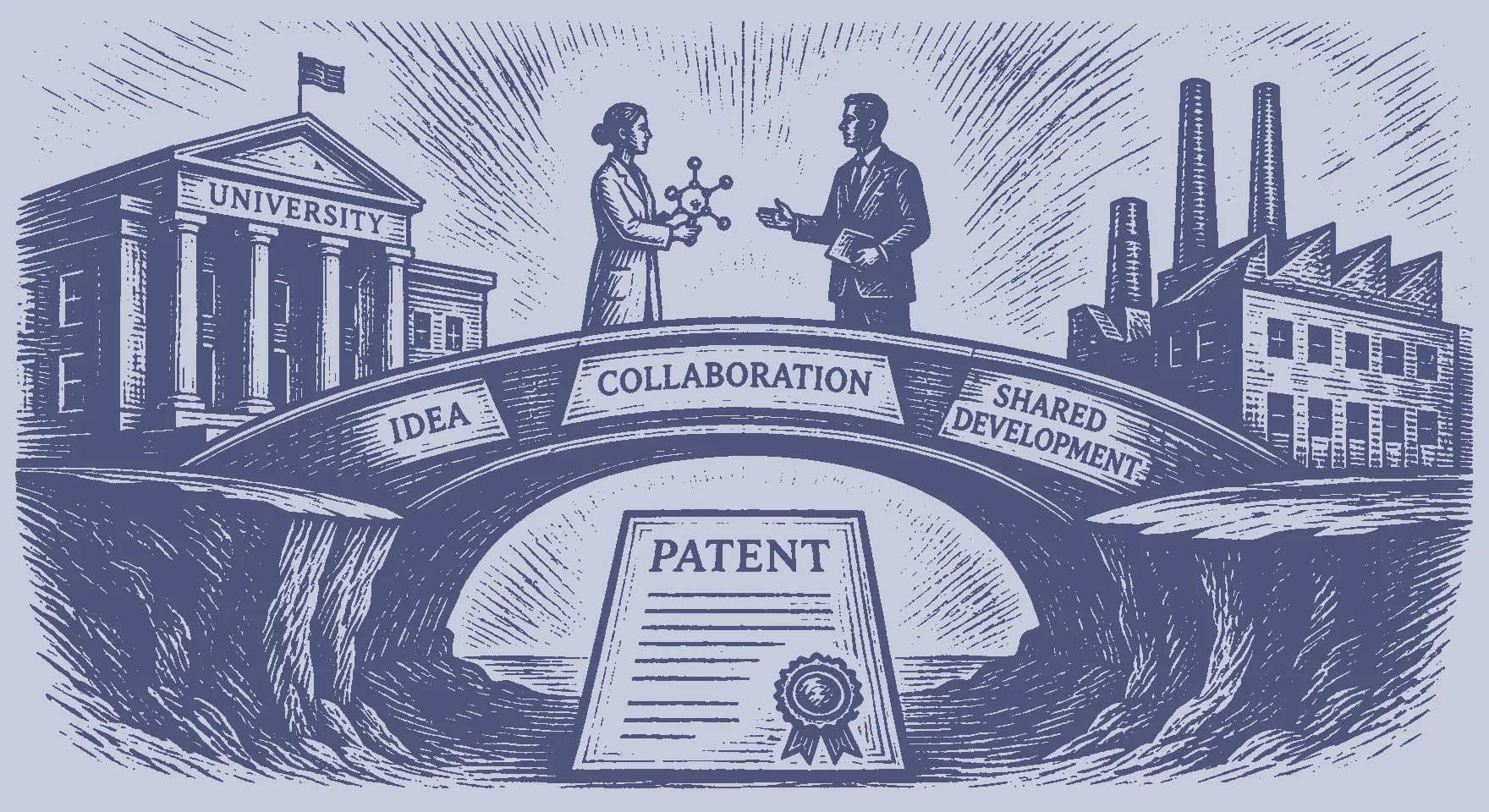
For decades, technology commercialization has followed a familiar path: conduct research, file a patent, and then begin searching for industry partners.
But today's innovation landscape rewards a different approach.
The most successful university-industry collaborations often begin long before intellectual property is finalized. By engaging companies earlier in the research lifecycle, institutions can build stronger partnerships, accelerate commercialization, and ensure their discoveries are solving problems that matter most.
Moving Beyond the Traditional Commercialization Model
Waiting until a patent is filed can unintentionally limit a technology's commercial potential. At that stage, researchers are often presenting a finished solution to companies that had little opportunity to influence its development.
Early industry engagement changes the dynamic. Instead of asking, "Who wants to license this?" universities can ask, "Who is facing this challenge today?"
That simple shift creates space for collaboration rather than just commercialization.
Early Conversations Create Better Outcomes
Industry partners bring valuable perspectives that complement academic research. They understand customer pain points, regulatory realities, manufacturing constraints, and evolving market demands.
These insights can help researchers:
- Validate real-world applications.
- Identify new use cases and markets.
- Strengthen funding proposals with demonstrated industry interest.
- Build relationships that can lead to sponsored research, licensing agreements, or startup partnerships.
Rather than changing the science, early engagement helps ensure the science has a clearer path to impact.
Commercialization Is About Relationships, Not Just IP
Patents remain an essential part of protecting innovation. But intellectual property alone rarely drives successful technology transfer.
The strongest commercialization outcomes are built on trust, shared goals, and ongoing dialogue between researchers and industry stakeholders. When companies are involved before a patent is filed, they become invested in the technology's success—not just interested in acquiring it later.
Those relationships often outlast any single licensing opportunity.
A More Proactive Future for Innovation
As universities look to increase research impact, the focus is shifting from reactive outreach to proactive partnership development.
Institutions that connect researchers with relevant industry partners early are better positioned to accelerate technology transfer, attract new research collaborations, and create solutions that address real market needs.
The future of commercialization isn't simply about filing patents faster. It's about building the right relationships sooner.
At FirstIgnite, we believe the best innovations reach the market when meaningful industry connections happen early. By helping researchers and innovation teams identify and engage the right partners before the patent process is complete, we help lay the foundation for stronger collaborations—and greater real-world impact.
Ready to Build Stronger Industry Partnerships?
The best commercialization opportunities don't begin with a patent—they begin with the right conversation. If your institution is looking to connect researchers with industry earlier, identify high-value partners, and accelerate the path from discovery to impact, FirstIgnite can help.
Contact us today to learn how our platform helps universities and research institutions build meaningful industry collaborations from the earliest stages of innovation.
Blogs
Connecting Industry & Academia
University
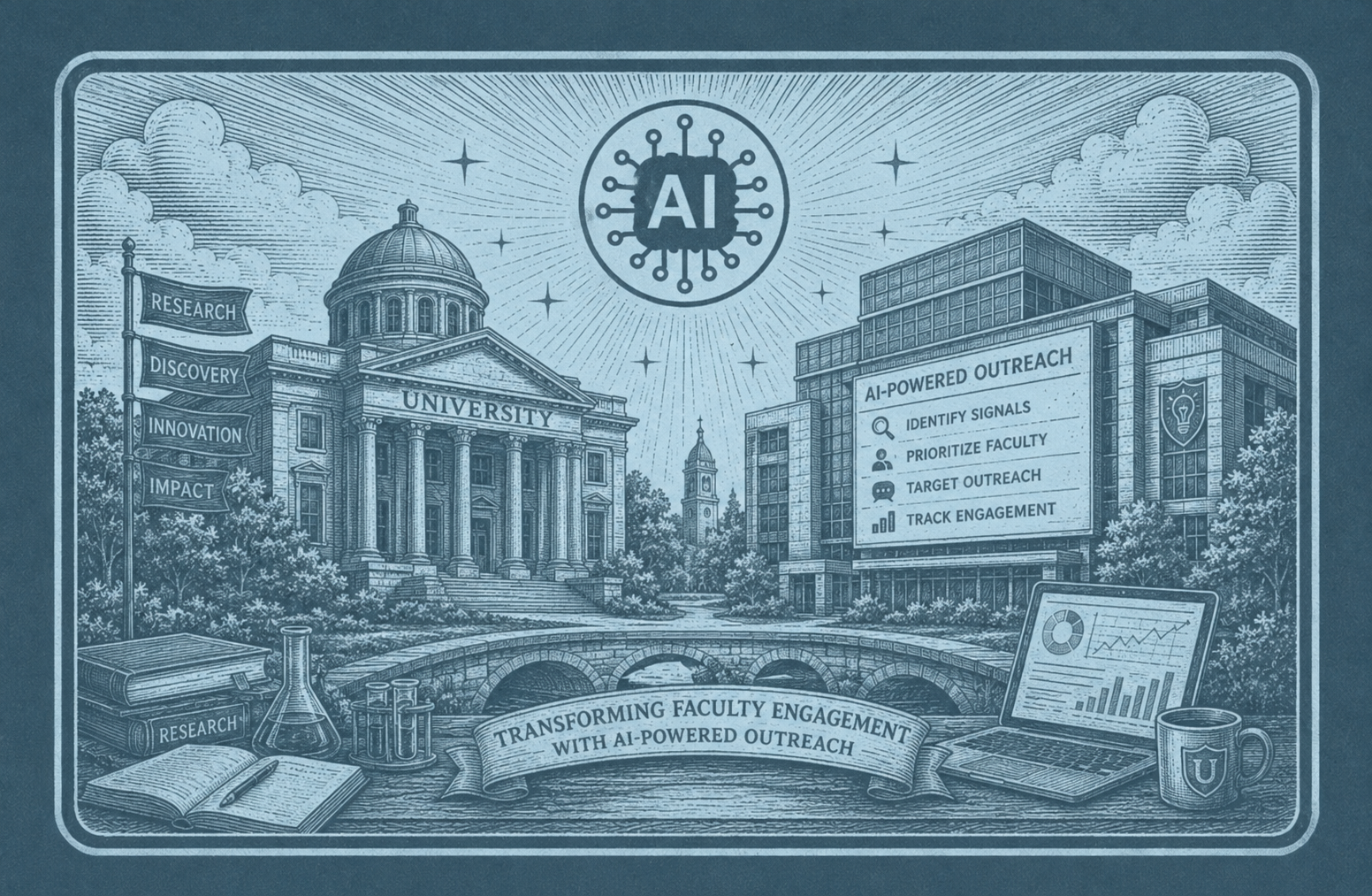
How universities are transforming faculty engagement with AI-powered outreach
June 29, 2026
•
xx
MIN READ
Faculty IP does not begin in a CRM. It begins in everyday research. A lab experiment, a grant milestone, a student conversation. But between discovery and disclosure, there is a gap that most technology transfer offices still struggle to close.
When faculty do not recognize what qualifies as protectable IP or do not know who to tell, valuable inventions never make it into the commercialization pipeline. When that happens, universities lose not just licensing revenue but also the chance to translate research into real-world impact.
Across institutions, a consistent pattern is emerging. Teams are moving from passive disclosure models to proactive faculty engagement strategies.
From inbound disclosure to proactive discovery
Traditionally, most tech transfer offices rely on a simple model. Educate faculty, wait for disclosures, then evaluate IP.
But this model assumes two things that often are not true.
First, that faculty understand what counts as an invention.
Second, that they know when and how to engage the TTO.
In practice, promising innovations are often invisible to the office until long after key decisions have been made such as publication, external collaboration, or early commercialization activity.
As a result, many TTO teams describe a similar challenge. They are onlyseeing the tip of the iceberg.
The shift to a faculty engagement engine
Rather than treating engagement as a communications function, leading institutions are redefining it as an operational workflow.
The goal is shifting from faculty coming to the office when ready to identifying and engaging faculty earlier in the research lifecycle.
To do that, teams are focusing on a few core capabilities:
- Identifying research signals earlier
- Prioritizing faculty and projects with commercialization potential
- Coordinating outreach across departments
- Tracking engagement over time in a structured way
This is where platforms like FirstIgnite are being used to supportfaculty engagement workflows at scale.
Turning research signals into actionable outreach
The core challenge is not a lack of information. It is fragmentation.
Research activity lives across publications, grants, internal systems,and personal networks. Without a unified view, it becomes difficult to know who to engage and when.
AI-supported engagement systems help teams consolidate these signals and surface:
- Emerging research themes across departments
- Faculty working in IP-relevant domains
- Potential industry alignment opportunities
- Signals that indicate early stage innovation activity
This allows outreach to shift from reactive to timely.
Instead of engaging after a discovery is fully formed, teams can begin conversations earlier when guidance, education, and support are most effective.
A new model of faculty outreach
As engagement becomes more data informed, outreach is changing.
Instead of broad, generalized messaging, institutions are moving toward targeted, context aware communication such as:
- Your recent work in X area may have commercialization relevance, here is how disclosure works
- We are seeing strong industry interest in Y, your research may align
- Here is how similar research at peer institutions moved toward licensing
The tone becomes less administrative and more collaborative.
Because outreach is grounded in actual research activity, engagement quality improves.
Scaling what was once relationship driven
Historically, faculty engagement depended heavily on individual TTO staff knowledge, such as who was working on what, who might disclose, and who needed follow up.
That model can work at small scale but becomes difficult as research volume increases.
Modern engagement workflows aim to systematize that institutional knowledge by:
- Centralizing faculty and research activity data
- Tracking engagement history in one place
- Coordinating outreach across teams
- Reducing reliance on individual memory or siloed spreadsheets
The goal is not to replace human relationships but to make them more scalable and consistent.
Why this matters now
Universities are under increasing pressure to translate research into measurable impact faster and with fewer resources.
At the same time, research output continues to grow across disciplines,making it harder for TTOs to keep pace using traditional outreach methods.
The gap between what is being discovered and what is being disclosed is widening.
Proactive faculty engagement is becoming one of the few levers that directly addresses that gap.
Conclusion: engagement is becoming infrastructure
Faculty engagement is shifting from an informal outreach activity to acore operational system within innovation offices.
The institutions making progress are not just improving communications.They are building structured ways to identify, prioritize, and engage potential inventors earlier.
FirstIgnite’s faculty engagement capabilities are designed to support that shift, helping teams bring more visibility to research activity and more consistency to outreach.
Because IP does not start at disclosure.
It starts when institutions are able to see and act on research signals early enough to matter.
Events
Connecting Industry & Academia
APLU 2026 COR Summer Meeting
June 17, 2026
•
xx
MIN READ
Join FirstIgnite at the APLU Council on Research Summer Meeting
June 21–24, 2026
Boulder, Colorado
The APLU Council on Research (COR) 2026 Summer Meeting brings together Senior Research Officers (SROs), research leaders, and university administrators from APLU member institutions to discuss the future of research, innovation, partnerships, and institutional strategy.
FirstIgnite is excited to attend this year's meeting in Boulder and connect with research leaders looking to strengthen faculty engagement, identify strategic partners, and accelerate research growth through AI-powered research intelligence.
Stop by the FirstIgnite booth to see how universities are using AI to identify aligned industry and funding partners, engage faculty at scale, and uncover new opportunities for research collaboration and growth.
Schedule a Meeting
Attending APLU COR 2026? Visit our booth or connect with the FirstIgnite team to learn how universities are using AI to identify partnership opportunities, engage faculty, and drive research impact.
Contact us to schedule a meeting during the conference.
Connecting Industry & Academia
CMU and Fujitsu Launch Physical AI Research Center
April 27, 2026
•
xx
MIN READ
Artificial intelligence is moving beyond servers and screens. Carnegie Mellon University (CMU) and Fujitsu, a top Japanese IT provider, have partnered on an AI research center to revolutionize how machines interact with the physical world.
The Fujitsu-Carnegie Mellon Physical AI Research Center is devoted to creating AI-powered machines and robots that tackle critical issues like labor shortages and workplace safety. This groundbreaking partnership is a major leap toward bringing innovative physical AI solutions to real-world challenges.
This partnership demonstrates how embedding intelligence into real-world machines—and working together—drives true innovation across industries.
Bringing AI into the Physical World
Physical AI puts intelligence directly into robots and autonomous systems, allowing them to act, interact, and make decisions in the real world instead of just processing data behind screens.
With physical AI, machines can sense, decide, and act in real environments—handling obstacles and delicate tasks while making decisions on the spot. They move beyond computation to direct participation in the world.
Interest in physical AI is rapidly growing as experts turn to robotics and machine learning for practical solutions. The Fujitsu-CMU Center is the hub where these ideas become real-world innovations.
A State-of-the-Art Testing Ground
The research center is based at CMU’s advanced Robotics Innovation Center in Pittsburgh, offering top facilities for developing and testing physical AI systems.
The 150,000-square-foot facility equips researchers to rigorously develop and test physical AI systems, ensuring these machines are safe, reliable, and ready for real-world impact.
Solving the Global Labor Crisis
Global labor shortages are putting pressure on industries everywhere. Physical AI offers a real solution by enabling robots to handle repetitive or dangerous tasks, increasing productivity and safety while allowing people to focus on higher-value work.
Physical AI enables companies to boost productivity by deploying robots for repetitive or hazardous tasks, improving efficiency and workplace safety.
Physical AI empowers workers by handling tough, repetitive tasks. This lets people focus on safer, strategic roles and boosts overall efficiency.
Transforming Manufacturing and Logistics
Physical AI boosts manufacturing and logistics by helping robots quickly handle complex tasks like navigating warehouses, assembling parts, and managing inventory. This leads to faster, more reliable deliveries and efficient operations.
Unlike traditional robots, AI-powered machines quickly adapt to unexpected obstacles and changing environments.
These smart systems streamline tasks like loading, assembly, and inventory, making supply chains faster and more reliable.
Advancing Construction, Infrastructure, and Healthcare
Physical AI is revolutionizing construction, infrastructure, and healthcare by empowering robots to handle complex tasks, enhance safety, and support staff in critical roles.
In construction and infrastructure, robots handle heavy lifting, precise tasks, and structural inspections, improving safety and speeding up projects while preventing failures.
Physical AI also addresses healthcare staffing shortages by helping with patient transport, room cleaning, and supply management, allowing medical professionals to focus more on patient care.
The Power of Academic and Industry Partnerships
The Fujitsu-Carnegie Mellon Physical AI Research Center proves that major breakthroughs happen through strong academic and industry partnerships—achieving what neither could do alone.
Fujitsu brings deep IT expertise, while CMU leads in robotics, engineering, and AI research.
By combining CMU’s research innovation with Fujitsu’s industry know-how, this partnership rapidly turns groundbreaking AI and robotics ideas into real-world solutions that deliver real value.
Breaking Down Disciplinary Silos
Effective physical AI requires cross-disciplinary teamwork, combining expertise in engineering, robotics, language technologies, and ethics to tackle complex challenges.
Center experts in robotics, engineering, language technology, and ethics collaborate closely to ensure every physical AI system is advanced, safe, and reliable.
Why Collaboration and Standardization Matter
Physical AI still faces hurdles, like supply chain gaps and lack of standardization that keep robots and systems disconnected.
Without common standards and collaboration, physical AI systems stay isolated and can't scale across industries. The Fujitsu-CMU partnership is crucial for connecting these systems and enabling widespread adoption.
The Fujitsu-CMU partnership is driving physical AI forward by establishing standards and encouraging collaboration, making it easier for businesses to adopt and integrate smart machines across industries.
Building on a Legacy of AI Innovation
CMU advances AI by partnering with industry leaders to drive innovative research and real-world impact.
CMU’s recent collaboration with Bank of New York Mellon created a major AI Lab, while the university’s Learnvia platform now supports AI-driven learning at colleges nationwide.
Martial Hebert, dean of CMU’s School of Computer Science, says the new center strengthens CMU’s commitment to solving real-world problems through industry partnerships, ensuring innovations reach those who need them most.
Partner with FirstIgnite to Build the Future
The Fujitsu-Carnegie Mellon Physical AI Research Center proves that real progress comes from strong partnerships between industry and leading universities.
Partnering with leading institutions unlocks innovative AI and robotics solutions for your toughest business challenges.
Let FirstIgnite connect you with top academic partners to drive innovation and strategic growth.
Contact FirstIgnite to explore partnerships and accelerate innovation for your business.
Connecting Industry & Academia
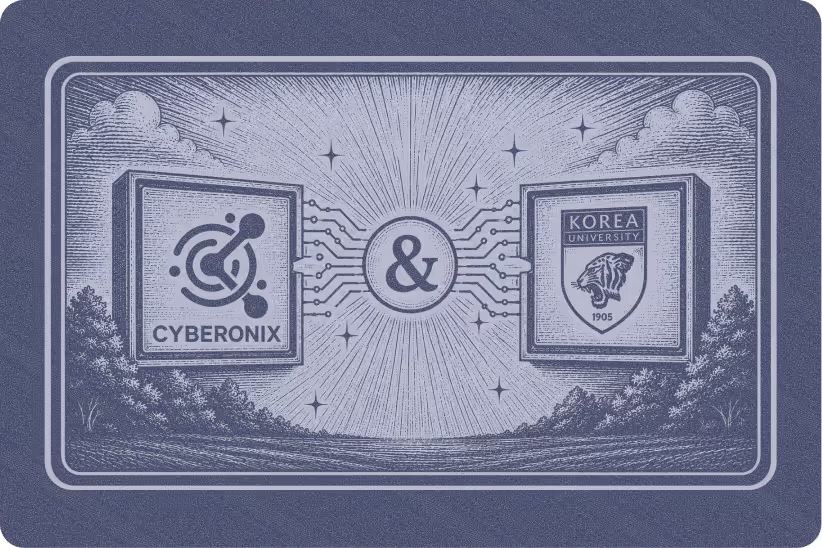
Cyberonix and Korea University Partner to Accelerate AI Innovation and Industry Collaboration
March 31, 2026
•
xx
MIN READ
In a strategic move to bridge the gap between academic research and real-world technology challenges, Cyberonix Experts, LLC has signed a Memorandum of Understanding (MOU) with the College of Informatics at Korea University—one of South Korea’s leading institutions in artificial intelligence education and research.
The agreement lays the groundwork for a multi-faceted collaboration focused on advancing artificial intelligence (AI), software engineering, and modern computing systems. By combining Cyberonix’s industry expertise with Korea University’s academic excellence, the partnership aims to cultivate innovation, develop talent, and create meaningful opportunities for students and researchers alike.
Driving Practical AI Education and Research
At the core of the partnership is a shared commitment to making AI education more practical, relevant, and industry-aligned. The two organizations plan to explore a wide range of initiatives, including:
- AI-focused coursework and curriculum development
- Project-based software engineering programs
- Joint seminars and technical workshops
- Industry-driven student projects
- Collaborative research in emerging AI technologies
These efforts are designed to give students hands-on experience solving real engineering problems, ensuring they graduate with both theoretical knowledge and practical skills that are immediately applicable in the workforce.
Expanding Opportunities for Students and Researchers
Beyond traditional coursework, discussions between Cyberonix and Korea University have also highlighted several forward-looking initiatives. These include AI software camps, deep-tech challenge projects, global lecture series, and industry-sponsored capstone programs.
Such programs aim to immerse students in real-world scenarios, encouraging innovation while fostering collaboration between academia and industry leaders. This approach not only enhances learning outcomes but also helps students build valuable networks and career pathways in the rapidly evolving AI sector.
Strengthening Industry-Academic Connections
For Cyberonix, the partnership represents a significant step in strengthening its ties to cutting-edge academic research and emerging talent. By engaging directly with students and faculty, the firm gains access to fresh perspectives and innovative ideas while contributing its own real-world insights into complex AI and software systems.
This collaboration also aligns with Cyberonix’s broader mission of delivering high-level technical expertise to clients navigating complex technology decisions. With a network of faculty experts from leading U.S. institutions, the firm continues to stay at the forefront of advancements in AI, distributed computing, and large-scale software engineering.
Supporting High-Stakes Technology Decisions
Cyberonix’s involvement in academic partnerships like this one enhances its ability to provide rigorous, research-backed analysis to law firms, corporate leaders, and investors. By integrating academic insights with practical engineering experience, the firm is well-positioned to support clients in areas such as AI systems evaluation, software architecture, source code analysis, and technology due diligence.
A Shared Vision for the Future of AI
As artificial intelligence continues to transform industries worldwide, collaborations like this highlight the growing importance of aligning education with real-world demands. By working together, Cyberonix and Korea University are not only advancing AI research but also shaping the next generation of innovators and problem-solvers.
Looking to build impactful AI partnerships like this?
Connect with FirstIgnite to discover collaboration opportunities, access cutting-edge research, and turn academic innovation into real-world solutions. Whether you're seeking research partners, emerging technologies, or commercialization pathways, our platform helps you move faster.