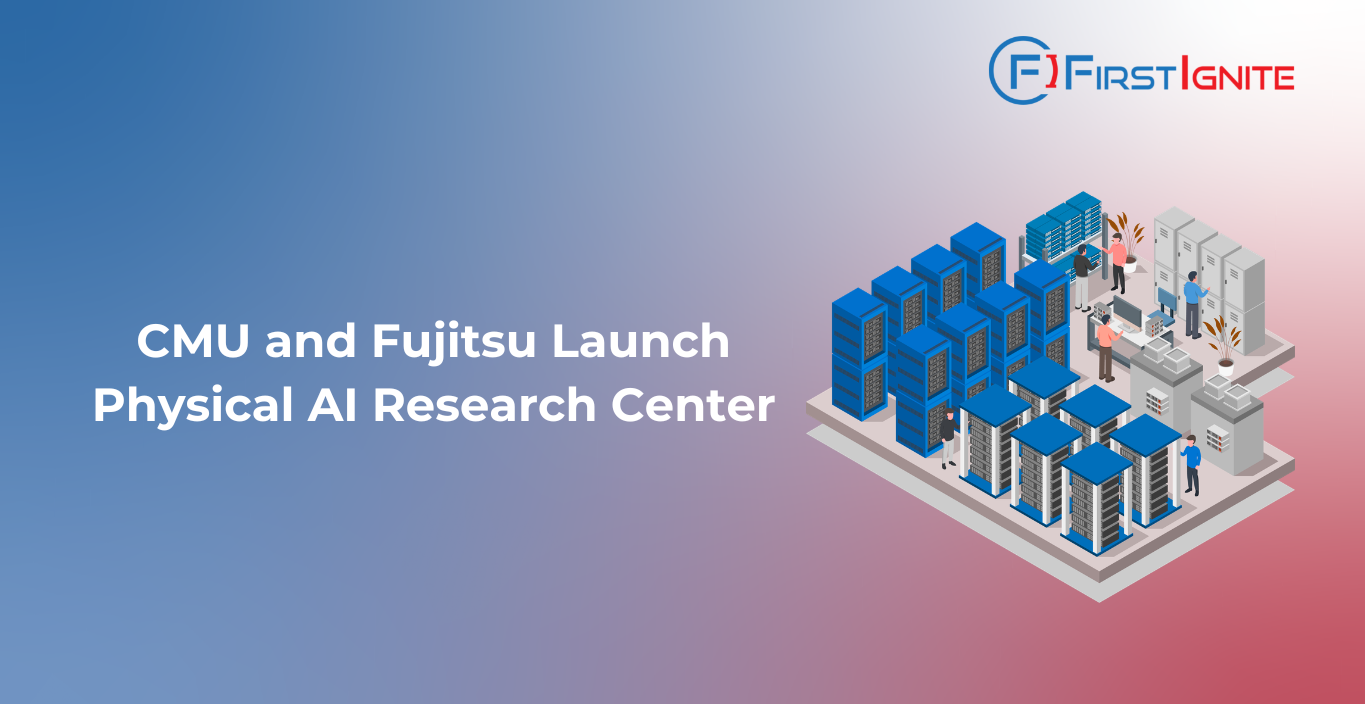
Artificial intelligence is moving beyond servers and screens. Carnegie Mellon University (CMU) and Fujitsu, a top Japanese IT provider, have partnered on an AI research center to revolutionize how machines interact with the physical world.
The Fujitsu-Carnegie Mellon Physical AI Research Center is devoted to creating AI-powered machines and robots that tackle critical issues like labor shortages and workplace safety. This groundbreaking partnership is a major leap toward bringing innovative physical AI solutions to real-world challenges.
This partnership demonstrates how embedding intelligence into real-world machines—and working together—drives true innovation across industries.
Bringing AI into the Physical World
Physical AI puts intelligence directly into robots and autonomous systems, allowing them to act, interact, and make decisions in the real world instead of just processing data behind screens.
With physical AI, machines can sense, decide, and act in real environments—handling obstacles and delicate tasks while making decisions on the spot. They move beyond computation to direct participation in the world.
Interest in physical AI is rapidly growing as experts turn to robotics and machine learning for practical solutions. The Fujitsu-CMU Center is the hub where these ideas become real-world innovations.
A State-of-the-Art Testing Ground
The research center is based at CMU’s advanced Robotics Innovation Center in Pittsburgh, offering top facilities for developing and testing physical AI systems.
The 150,000-square-foot facility equips researchers to rigorously develop and test physical AI systems, ensuring these machines are safe, reliable, and ready for real-world impact.
Solving the Global Labor Crisis
Global labor shortages are putting pressure on industries everywhere. Physical AI offers a real solution by enabling robots to handle repetitive or dangerous tasks, increasing productivity and safety while allowing people to focus on higher-value work.
Physical AI enables companies to boost productivity by deploying robots for repetitive or hazardous tasks, improving efficiency and workplace safety.
Physical AI empowers workers by handling tough, repetitive tasks. This lets people focus on safer, strategic roles and boosts overall efficiency.
Transforming Manufacturing and Logistics
Physical AI boosts manufacturing and logistics by helping robots quickly handle complex tasks like navigating warehouses, assembling parts, and managing inventory. This leads to faster, more reliable deliveries and efficient operations.
Unlike traditional robots, AI-powered machines quickly adapt to unexpected obstacles and changing environments.
These smart systems streamline tasks like loading, assembly, and inventory, making supply chains faster and more reliable.
Advancing Construction, Infrastructure, and Healthcare
Physical AI is revolutionizing construction, infrastructure, and healthcare by empowering robots to handle complex tasks, enhance safety, and support staff in critical roles.
In construction and infrastructure, robots handle heavy lifting, precise tasks, and structural inspections, improving safety and speeding up projects while preventing failures.
Physical AI also addresses healthcare staffing shortages by helping with patient transport, room cleaning, and supply management, allowing medical professionals to focus more on patient care.
The Power of Academic and Industry Partnerships
The Fujitsu-Carnegie Mellon Physical AI Research Center proves that major breakthroughs happen through strong academic and industry partnerships—achieving what neither could do alone.
Fujitsu brings deep IT expertise, while CMU leads in robotics, engineering, and AI research.
By combining CMU’s research innovation with Fujitsu’s industry know-how, this partnership rapidly turns groundbreaking AI and robotics ideas into real-world solutions that deliver real value.
Breaking Down Disciplinary Silos
Effective physical AI requires cross-disciplinary teamwork, combining expertise in engineering, robotics, language technologies, and ethics to tackle complex challenges.
Center experts in robotics, engineering, language technology, and ethics collaborate closely to ensure every physical AI system is advanced, safe, and reliable.
Why Collaboration and Standardization Matter
Physical AI still faces hurdles, like supply chain gaps and lack of standardization that keep robots and systems disconnected.
Without common standards and collaboration, physical AI systems stay isolated and can’t scale across industries. The Fujitsu-CMU partnership is crucial for connecting these systems and enabling widespread adoption.
The Fujitsu-CMU partnership is driving physical AI forward by establishing standards and encouraging collaboration, making it easier for businesses to adopt and integrate smart machines across industries.
Building on a Legacy of AI Innovation
CMU advances AI by partnering with industry leaders to drive innovative research and real-world impact.
CMU’s recent collaboration with Bank of New York Mellon created a major AI Lab, while the university’s Learnvia platform now supports AI-driven learning at colleges nationwide.
Martial Hebert, dean of CMU’s School of Computer Science, says the new center strengthens CMU’s commitment to solving real-world problems through industry partnerships, ensuring innovations reach those who need them most.
Partner with FirstIgnite to Build the Future
The Fujitsu-Carnegie Mellon Physical AI Research Center proves that real progress comes from strong partnerships between industry and leading universities.
Partnering with leading institutions unlocks innovative AI and robotics solutions for your toughest business challenges.
Let FirstIgnite connect you with top academic partners to drive innovation and strategic growth.
Contact FirstIgnite to explore partnerships and accelerate innovation for your business.